
Premium LED vs Cheap Strip Lighting: What Actually Matters
CRI, bin matching, dimmer compatibility, driver quality — the four things that separate cinematic media-wall lighting from the strip lights at a hardware store.
by Walora Design TeamUpdated 9 min read
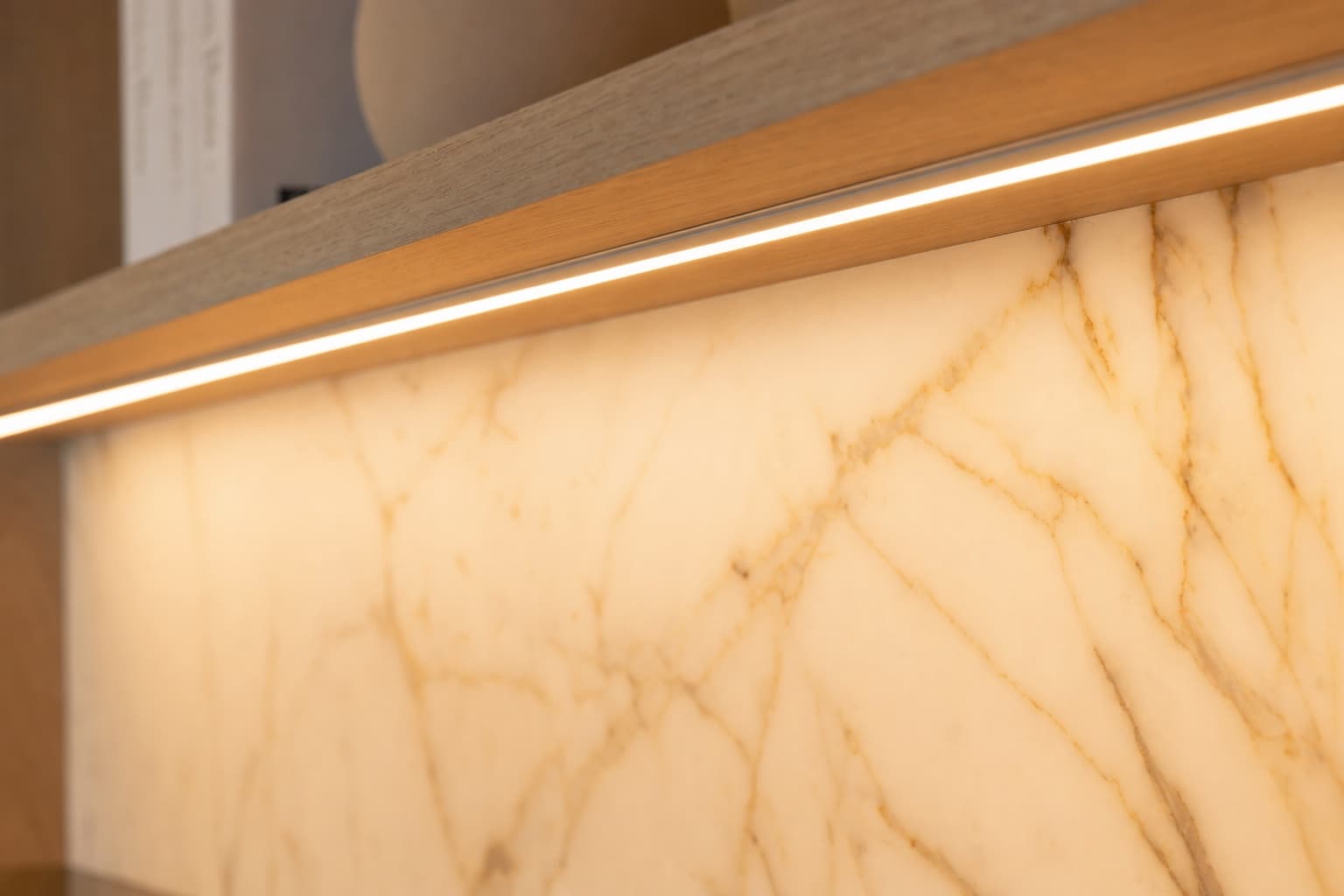
Lighting is the most under-appreciated upgrade in a media wall. Two visually identical walls in the same room can read as cinematic or cheap depending entirely on what's behind the diffuser. This guide is what to ask for.
What lighting actually does in a media wall
Three things, roughly in order of importance:
-
Reveals the finishes. The marble's veining, the veneer's grain, the lacquer's depth all rely on light to be seen. Bad light makes premium materials look budget; good light makes mid-range materials look richer than they are.
-
Creates ambient context for the screen. A TV viewed against a pitch-black wall produces eye strain. A TV bordered by a soft wash of warm bias light is comfortable to watch for hours.
-
Sets the mood of the entire room. A dimmable warm wash from a media wall is often the most-used light source in the living room. It's on every evening; it's the light you photograph the space in; it's the lighting layer that defines how the room feels.
A wall with cheap lighting fails all three of these. Marble looks chalky. Wood looks orange. The bias light flickers on the camera you use to photograph the family. Dimming the room means switching the wall off, because the LEDs can't go below 30 percent without strobing.
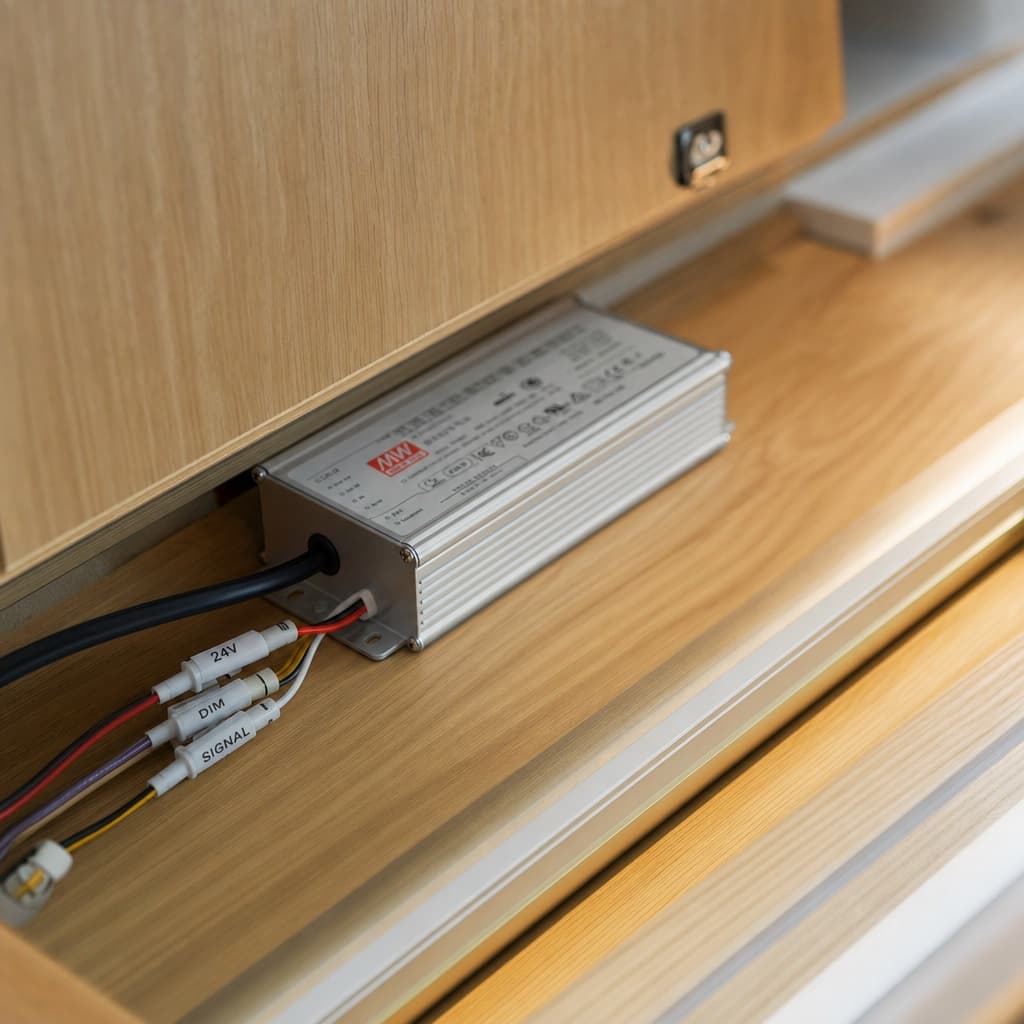 A premium LED driver and labelled wiring routed neatly through a service compartment behind a wood panel.
The four parameters that actually matter
1. CRI (Colour Rendering Index)
The single most important LED specification, and the one most rarely mentioned in quotes. CRI runs from 0 to 100. Sunlight is 100. Modern premium LEDs are 95+. Mainstream consumer LEDs are 80–85. Cheap commercial strip is 70–75.
The eye is surprisingly sensitive to CRI. Below 90, certain colours render incorrectly — most visibly reds and warm browns. A walnut veneer under CRI 80 light reads as a flat orange-brown. The same panel under CRI 97 reveals the warm undertones, grain depth, and natural variation that make it look like real wood.
Ask every supplier: what CRI is your LED? The willingness to answer with a specific number is one of the cleanest signals of supplier quality.
2. Colour Temperature Consistency (Bin Matching)
LEDs are sorted at the factory into "bins" — narrow ranges of colour temperature (e.g., 2700K ± 50K). A single batch from a factory might span 200 to 600 Kelvin across all its output. The factory sorts that batch into bins so that customers who care can order a single bin and get visual consistency.
Cheap suppliers don't specify bins. They order strips from whichever batch is cheapest, which means a five-metre wall might have LEDs ranging from 2650K (golden) at one end to 3250K (neutral) at the other. The eye reads this as the wall "looking off" without being able to name what's wrong.
Premium projects specify single-bin LEDs with a tolerance of ±100K or better. The result is a wall that reads as one continuous tone.
3. Driver Quality
The driver converts mains AC into the low-voltage DC the LEDs need. The driver is the only part of an LED system that consistently fails, and it's where cheap manufacturers cut the most cost.
A cheap driver:
- Uses low-frequency PWM dimming that flickers visibly to phone cameras
- Has a hard cut-off below 30 percent brightness
- Buzzes audibly when dimming
- Fails within 3 years under daily use
A premium driver (Mean Well, Tridonic, Osram):
- Uses constant-current or high-frequency PWM dimming
- Dims smoothly from 100 percent to 1 percent
- Is silent at every dimming level
- Lasts 8–12 years
The cost difference between cheap and premium drivers is roughly AED 80–150 per driver. The performance difference is the entire experience of dimming the room.
4. Diffusion
Looking directly at an LED produces a sharp dot of light. Looking at LEDs through a diffuser produces a smooth wash. Almost every premium media-wall installation uses a frosted acrylic or PMMA channel to diffuse the strip.
The cheapest installations skip the diffuser to save AED 80 per metre. The result is a "Christmas lights" effect — visible dots, especially at low dimming levels.
Where lighting goes in a media wall
There are usually four functional lighting zones in a custom media wall, and good design uses some combination of all four:
-
Bias light behind the TV. A soft warm strip on the back of the TV mount, reflecting onto the wall behind. Reduces eye strain dramatically during long viewing sessions.
-
Cove or recessed under shelves. A continuous strip along the underside of shelves or cabinet tops, washing light down the wall surface. Reveals stone or wood texture and creates depth.
-
In-cabinet lighting. For glass-fronted cabinets or open display shelving. Often motion-activated, lighting up when a door opens. CRI matters most here because the displayed objects are the focal point.
-
Floor wash. A discreet downward strip from the bottom of the lowest cabinet, washing the floor in front of the wall. Adds depth at night.
A well-designed wall is wired so each zone is independently dimmable, and often connected to a smart-home system so morning, evening, and movie scenes are presets.
The cost of cutting the lighting budget
Lighting is typically 8 to 12 percent of a custom media wall's total cost. The temptation is to view it as the easiest line to cut — "we'll just upgrade the strips later if we want."
Two problems with this:
-
Cheap LED strips are usually embedded inside the cabinetry, behind the diffusers, behind the panels. Upgrading them later means partially dismantling the wall.
-
Once the wall is installed with cheap strips, the photos taken in the new home, the first family gatherings, the look that defines the room's identity — those all happen under the wrong light. You don't really fix this later; you live with it.
The right place to economise is somewhere else. A media wall with mid-tier veneer and excellent lighting looks better than a wall with premium veneer and bad lighting. Lighting is the multiplier on every other material decision.
What to ask for in writing
A premium lighting specification on a quote should include all of:
- Manufacturer and model of LED strip
- CRI rating (≥ 95)
- Colour temperature (specify Kelvin, e.g., 2700K or 3000K)
- Bin tolerance (e.g., ±100K)
- Manufacturer and model of driver
- Dimming range (e.g., 100 percent down to 1 percent)
- Diffuser type and channel material
- Warranty period
If a supplier responds to any of these questions with "high quality" or "European brand" without specifics, the price you're being quoted is being met by buying whatever's cheapest that day. Lighting is the line item where this happens most.
Frequently asked questions
About the author
The Walora Design Team has been crafting custom media walls for UAE homes since 2024 — every piece built to order in our Dubai workshop from real natural stone, premium stained wood veneers and bin-matched LED.
Related reading
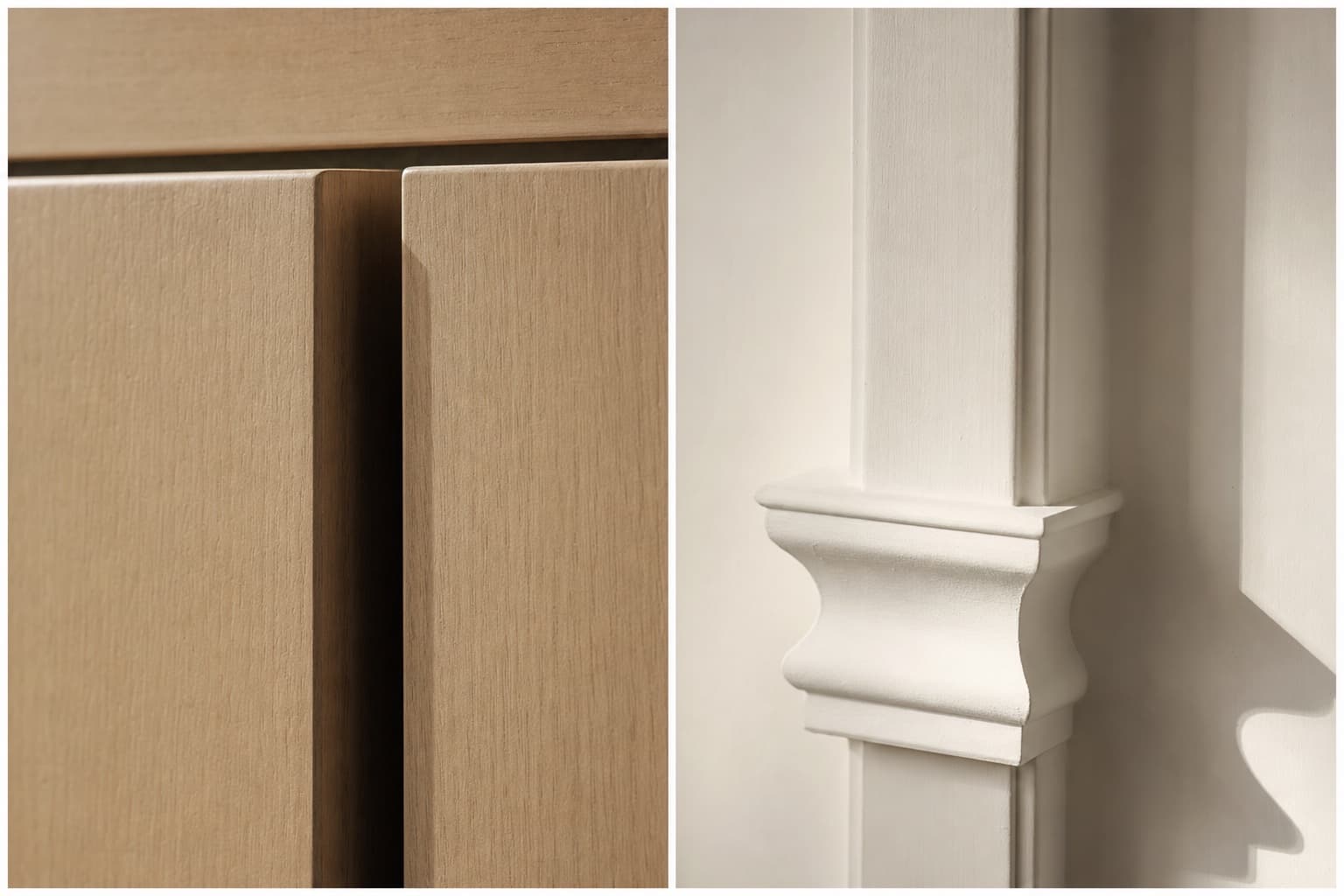
Design & Inspiration10 min read
Modern vs Classic Media Wall Styles: A Visual Comparison
Clean-line modern vs detailed classic interiors. How to choose which language fits the rest of your home, and the design moves that distinguish each.
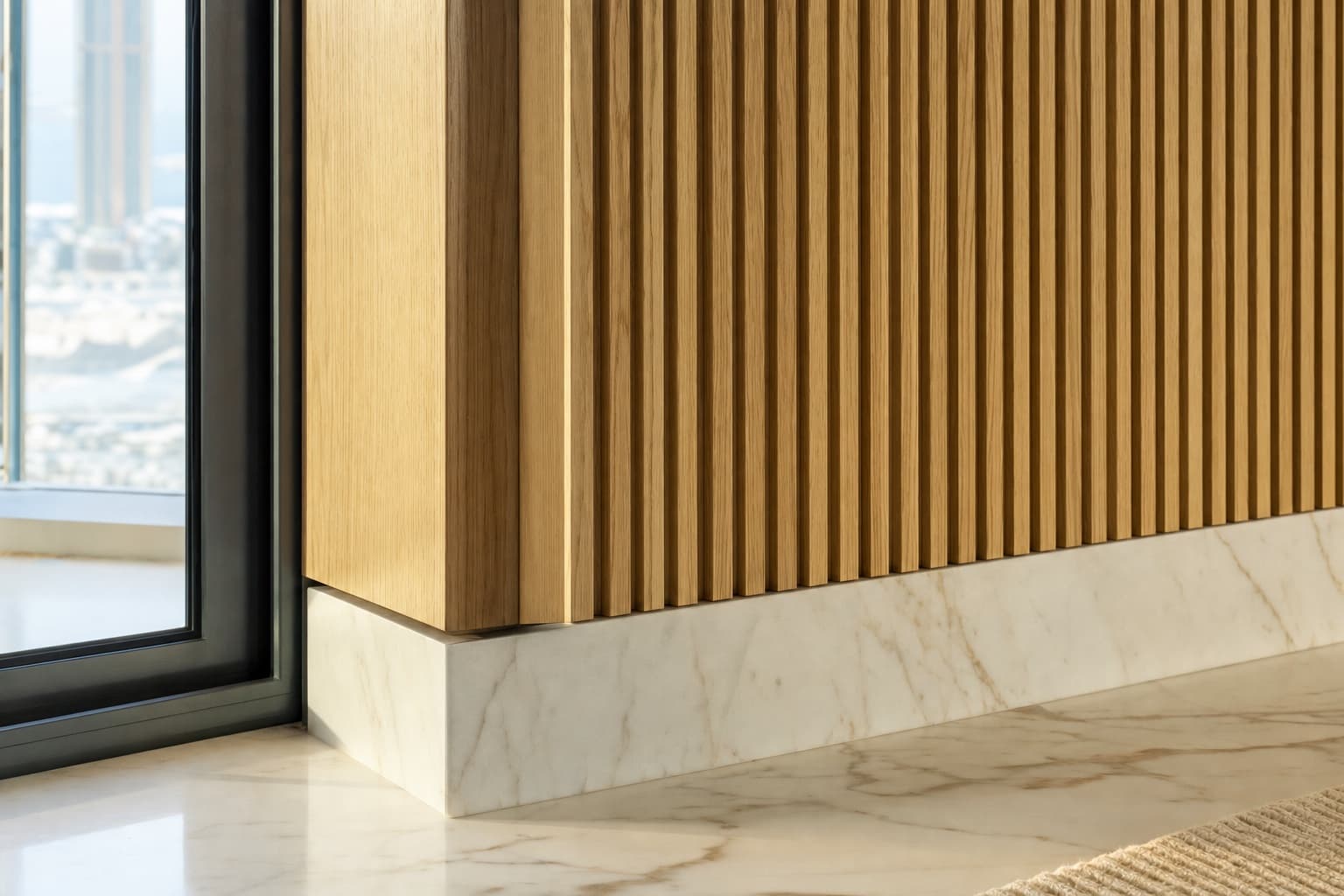
Design & Inspiration10 min read
Where to Place a Media Wall in an Open-Plan Living Room
Open-plan apartments rarely have an obvious 'TV wall'. The four placement principles that decide whether the media wall anchors the room or fights it.
Design & Inspiration11 min read
Maximalist vs Minimalist Media Walls: Designing for the Interior You Have
When restraint is right, when richness is right, and the design principles that make either approach succeed in a UAE living room.