
Modern vs Classic Media Wall Styles: A Visual Comparison
Clean-line modern vs detailed classic interiors. How to choose which language fits the rest of your home, and the design moves that distinguish each.
by Walora Design TeamUpdated 10 min read
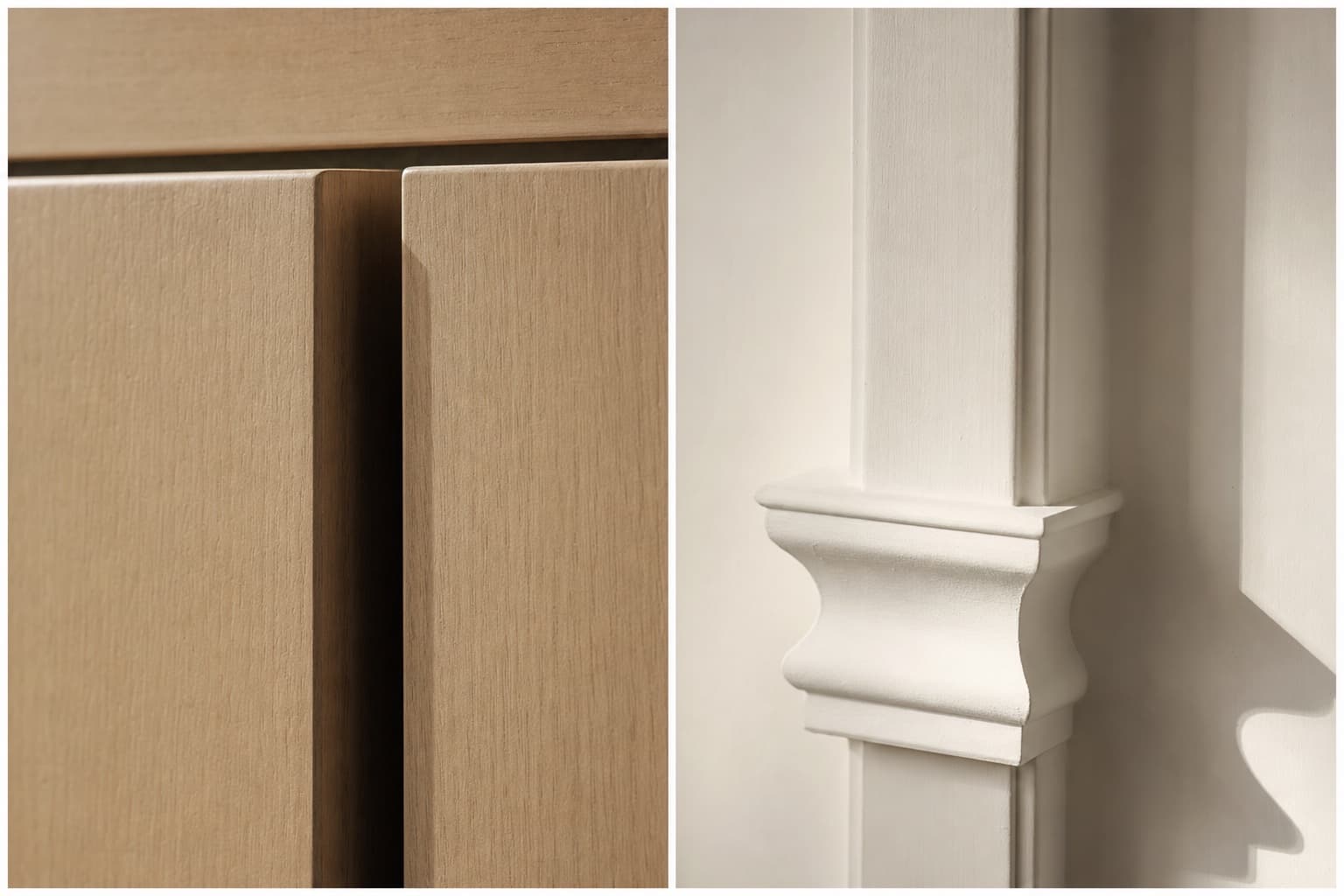
Two visual languages dominate UAE custom media-wall design. They're not mutually exclusive — most projects sit somewhere between — but understanding the poles helps locate your own preference and the right choice for your apartment.
What 'modern' means in 2026
The modern wall in 2026 is closer to Italian residential design than to mid-century modernism or to the cold minimalism of the early 2010s. Defining moves:
- Floor-to-ceiling stone or veneer surface — a single material, often a single slab, dominates the visual field
- Hidden hardware — push-to-open doors, integrated handles, no exposed hinges
- Horizontal emphasis — long shelves, wide soundbar nooks, low cabinets stretching across the wall's width
- Material contrasts — one bold stone (Calacatta or dark veining) against a quiet veneer (warm oak, ash, or warm walnut)
- Concealed lighting — light source invisible; light visible everywhere as warm wash
- TV partially or fully concealed — the TV is a function, not a feature
The mood: confident, restrained, contemporary but not cold.
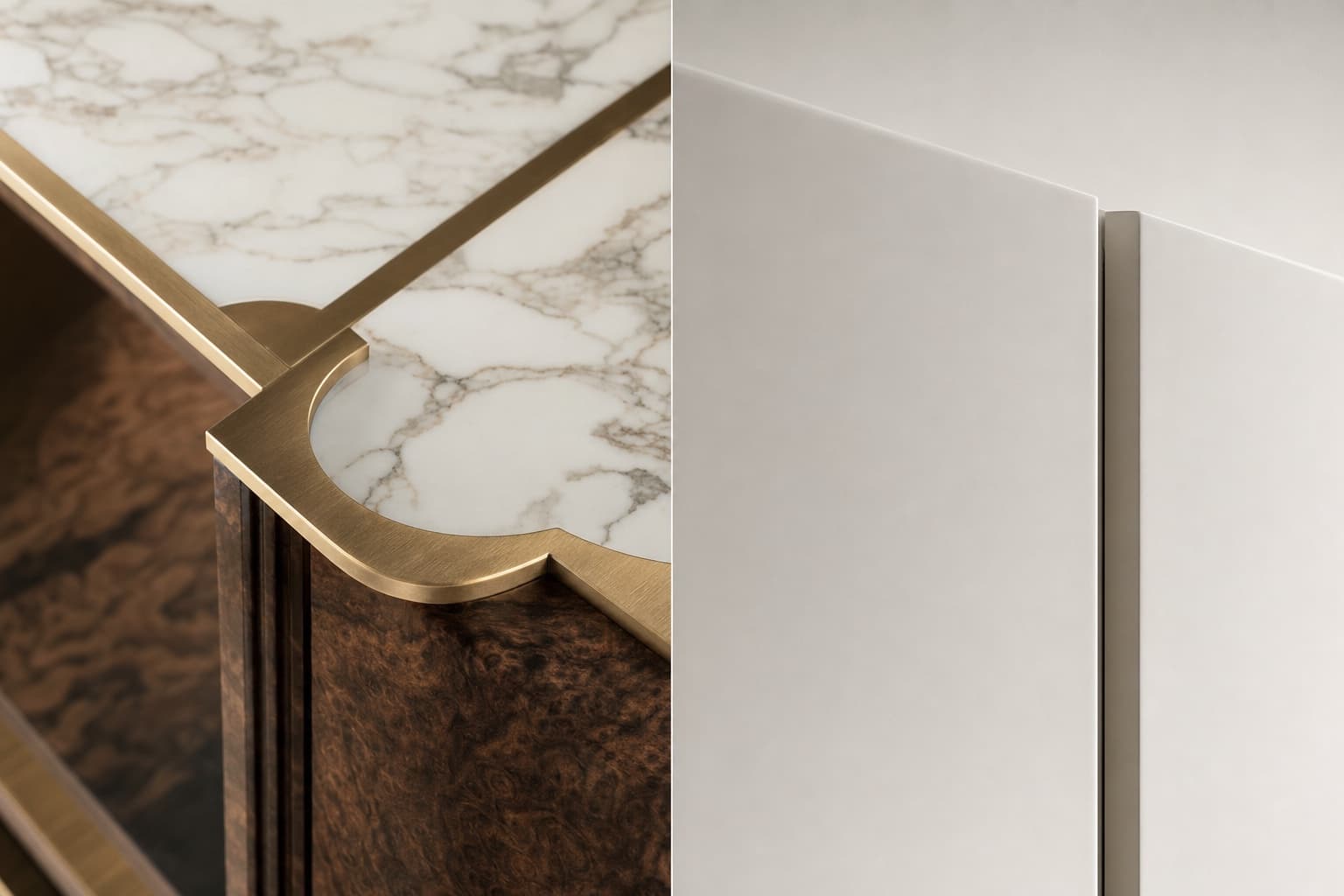
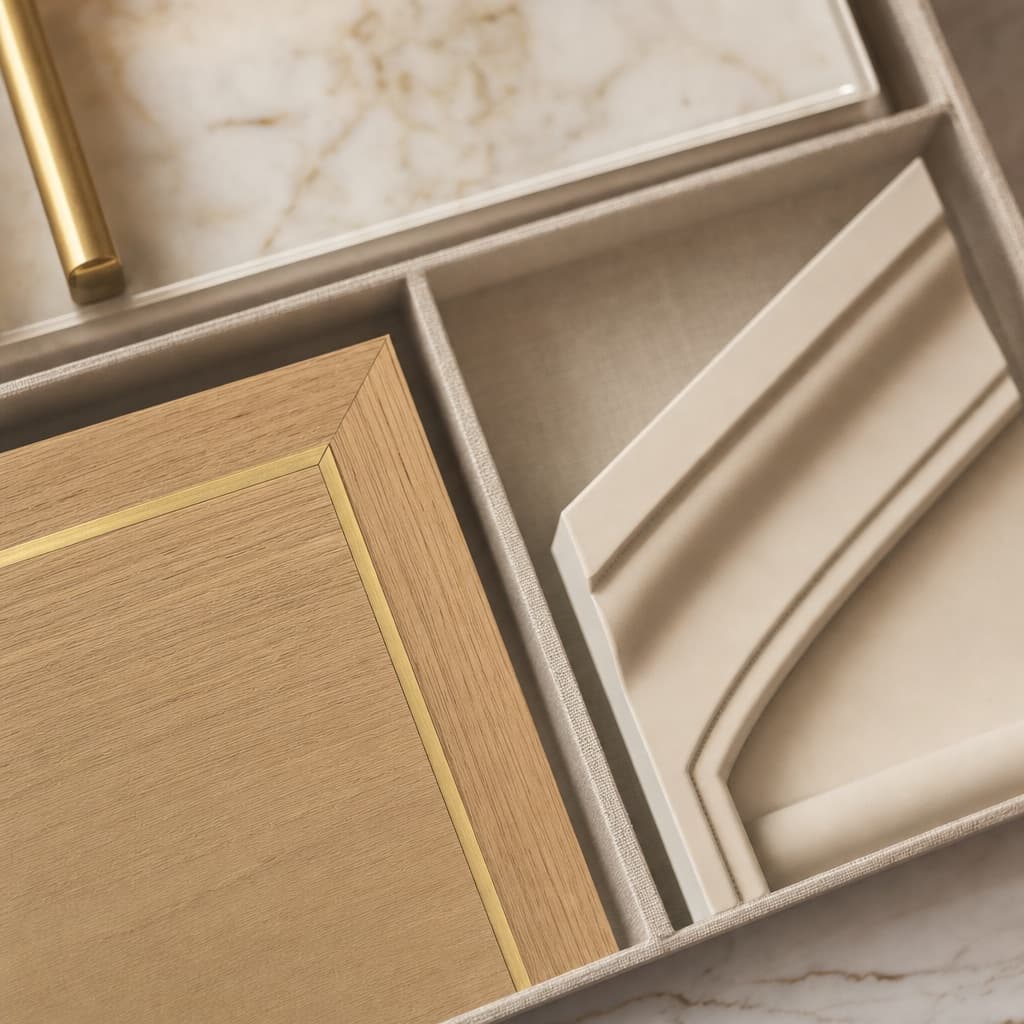 A designer's sample tray comparing a modern mitred warm-oak corner against a classic ogee moulding profile in matte lacquer.
What 'classic' means in 2026
Classic UAE media walls draw on European traditional cabinetry adapted for Gulf interiors:
- Symmetry — TV centred, balanced elements left and right
- Detailed millwork — frame-and-panel cabinet doors, decorative mouldings, traditional plinths and cornices
- Traditional materials — dark walnut veneer with grain matching, Calacatta or Negro Marquina marble, brushed brass or polished nickel hardware
- Layered features — fireplace below the TV, art shelving above, ornament rather than minimalism
- Visible hardware — pulls, knobs, sometimes leather strap pulls or aged brass cup pulls
- Warmer lighting — wall sconces, picture lights, decorative pendants integrated into the design
The mood: rich, considered, referenced to architectural traditions.
When modern wins
Modern is the right choice when:
- The apartment itself is modern (Downtown towers, Marina apartments, contemporary villas)
- The rest of the interior is minimalist
- The TV is a frequent use, daily presence — modern handles the everyday-screen aesthetic better
- The buyer is younger or values the contemporary visual language
- The room has strong architectural elements (large windows, double-height ceilings) that classical detailing would compete with
A modern wall in a contemporary apartment doesn't dominate the room — it joins it.
When classic wins
Classic is the right choice when:
- The apartment has traditional architectural cues (mouldings, panelled doors, traditional flooring)
- The interior style is European traditional or warm transitional
- The buyer prefers the timeless feel over the contemporary trend
- The room has space for the visual weight (classical detailing needs room to breathe)
- The home is a long-term residence rather than a transitional apartment
A classic wall in a traditional setting feels like it has always belonged.
The transitional middle ground
The most common premium choice in 2026 UAE projects is transitional — the cleanest elements of modern paired with the warmest elements of classic.
Characteristics:
- Real natural stone (often travertine or warm marble, not bold Calacatta)
- Premium European wood veneer (oak, ash, or warm walnut — not too dark)
- Handle-less or near-handle-less fronts (clean modern feel)
- Restrained lighting (concealed, warm, dimmable)
- Some symmetry but not strictly mirrored
- Brushed brass accents in small doses
The result reads as neither dated to a specific era nor self-consciously contemporary. It looks correct now and likely will still look correct in 15 years.
For most UAE buyers — typically professionals in their 30s or 40s — transitional is the safest premium answer.
Style by apartment type
A useful shortcut by apartment context:
Downtown Dubai high-rise apartment
Almost always modern or transitional. The architecture is contemporary; classic walls feel out of place.
Palm Jumeirah villa, traditional architecture
Classic or transitional. Modern can work if the interior is consistently contemporary; otherwise classic suits the architectural cues.
Jumeirah Lakes Towers / Marina apartment
Modern or transitional. Tower apartments tend toward contemporary; the views often want quiet interiors.
Arabian Ranches / Mudon villa
Transitional. The villas have classical Arabian architectural cues but the interiors are usually contemporary. Transitional bridges both.
Older Dubai apartment (Bur Dubai, Karama, Discovery Gardens)
Whatever suits the homeowner's taste. These spaces are less architecturally specific and accommodate either language.
New developments (Emaar Beachfront, Sobha, Damac Hills)
Modern. The developments are contemporary in language; modern fits naturally.
Style by buyer profile
Loose generalisations that often hold:
- Young professional couple, first apartment: Modern — fresh, contemporary, photographable
- Family with school-age children: Transitional — durable, photogenic, friendly to family life
- Empty-nesters, downsizing: Classic or transitional — references to traditional homes they're transitioning from
- Investors furnishing for sale or rent: Transitional — broadest appeal across buyer pools
- Designers / architects own home: Either, executed strongly — visual language as personal expression
These are loose, of course. The right answer is what fits the specific homeowner.
Common mistakes in each language
Modern mistakes
- Going too cold (white-white-white) — modern UAE apartments need warmth to handle the sun's intensity
- Removing all visual interest — minimalism without a feature feels unfinished
- Ignoring proportion — a tall narrow modern wall in a wide room reads as small
- Cheap materials hiding behind minimal design — modern's honest aesthetic shows poor materials more, not less
Classic mistakes
- Too literal — copying a European traditional style without adapting it to Dubai's light and scale
- Overcrowded — every classical element happening on one wall
- Inconsistent materials — real walnut next to lacquered MDF mouldings dilutes the whole effect
- Heavy for the apartment — classical detailing in a small apartment makes the room feel even smaller
How to decide
A useful exercise: take three photos of the rest of your apartment from typical viewing angles. The floor, the doors, the windows, any existing furniture you're keeping. Look at them as a set.
If the photos show clean lines, contemporary furniture, large flat surfaces, and modern fittings → modern or transitional.
If the photos show panelled doors, traditional flooring, classic furniture, ornamental architectural details → classic or transitional.
If the photos show a mix → transitional.
The wall has to live in the apartment that exists. Choosing a language that contradicts the apartment forces a stylistic argument every time you walk into the room. Choosing a language that supports the apartment lets the room read as one coherent space.
Frequently asked questions
About the author
The Walora Design Team has been crafting custom media walls for UAE homes since 2024 — every piece built to order in our Dubai workshop from real natural stone, premium stained wood veneers and bin-matched LED.
Related reading
Design & Inspiration9 min read
Premium LED vs Cheap Strip Lighting: What Actually Matters
CRI, bin matching, dimmer compatibility, driver quality — the four things that separate cinematic media-wall lighting from the strip lights at a hardware store.
Design & Inspiration10 min read
Where to Place a Media Wall in an Open-Plan Living Room
Open-plan apartments rarely have an obvious 'TV wall'. The four placement principles that decide whether the media wall anchors the room or fights it.
Design & Inspiration11 min read
Maximalist vs Minimalist Media Walls: Designing for the Interior You Have
When restraint is right, when richness is right, and the design principles that make either approach succeed in a UAE living room.