
Where to Place a Media Wall in an Open-Plan Living Room
Open-plan apartments rarely have an obvious 'TV wall'. The four placement principles that decide whether the media wall anchors the room or fights it.
by Walora Design TeamUpdated 10 min read
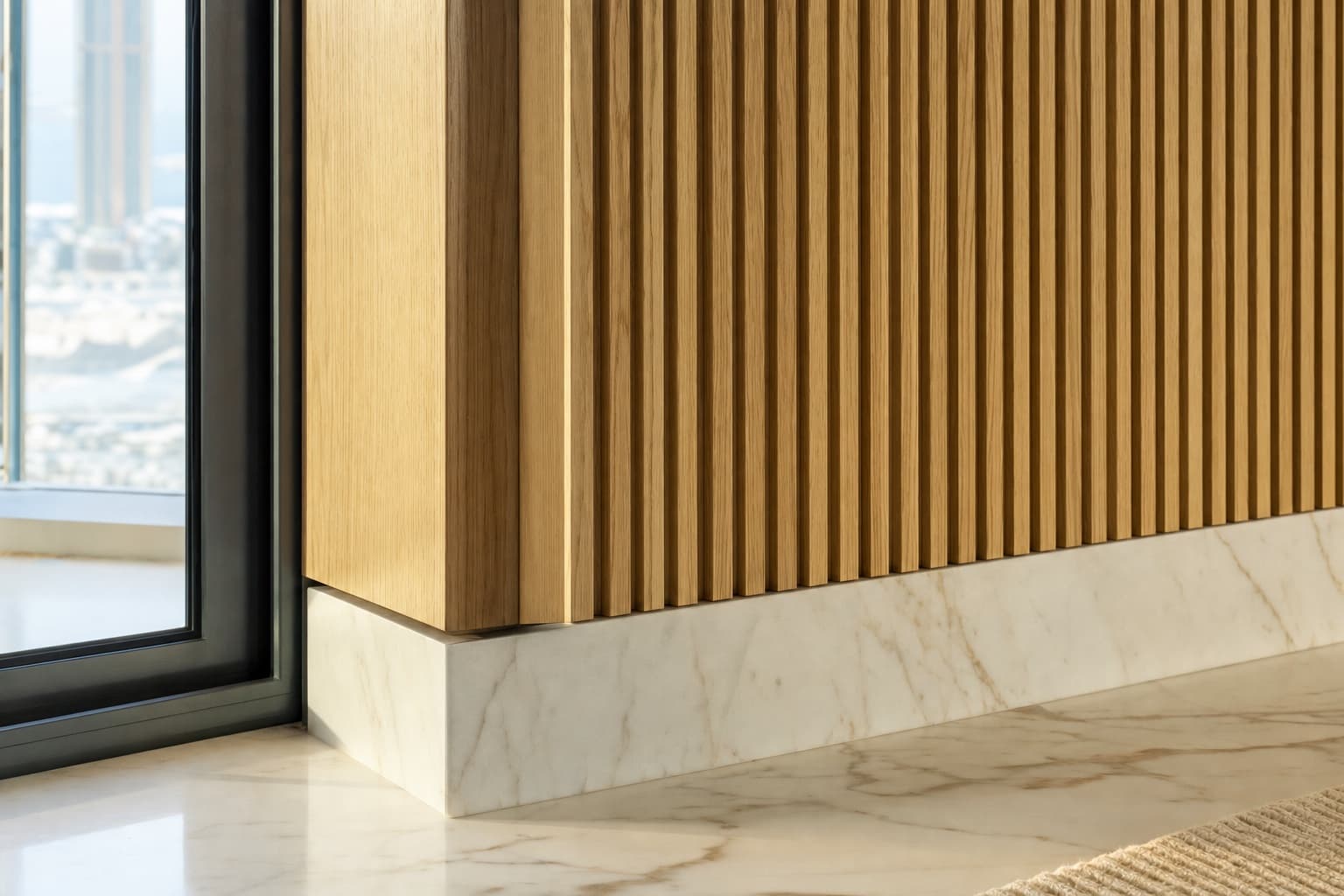
In open-plan UAE apartments — increasingly the norm in new developments — the question isn't usually "what design of media wall do I want?" It's "where exactly does it go?" This guide walks through the placement decision, which dictates everything that follows.
Why placement matters more in open-plan rooms
In a closed living room, the media wall placement is usually obvious — the largest wall not occupied by a door or window. In open-plan apartments, every wall has competition: kitchen on one side, dining on another, balcony windows, the door to the rest of the apartment, the structural columns that often divide the open space.
Get placement wrong and the wall fights the room. Get it right and the wall organises the entire living area.
The four principles that decide placement:
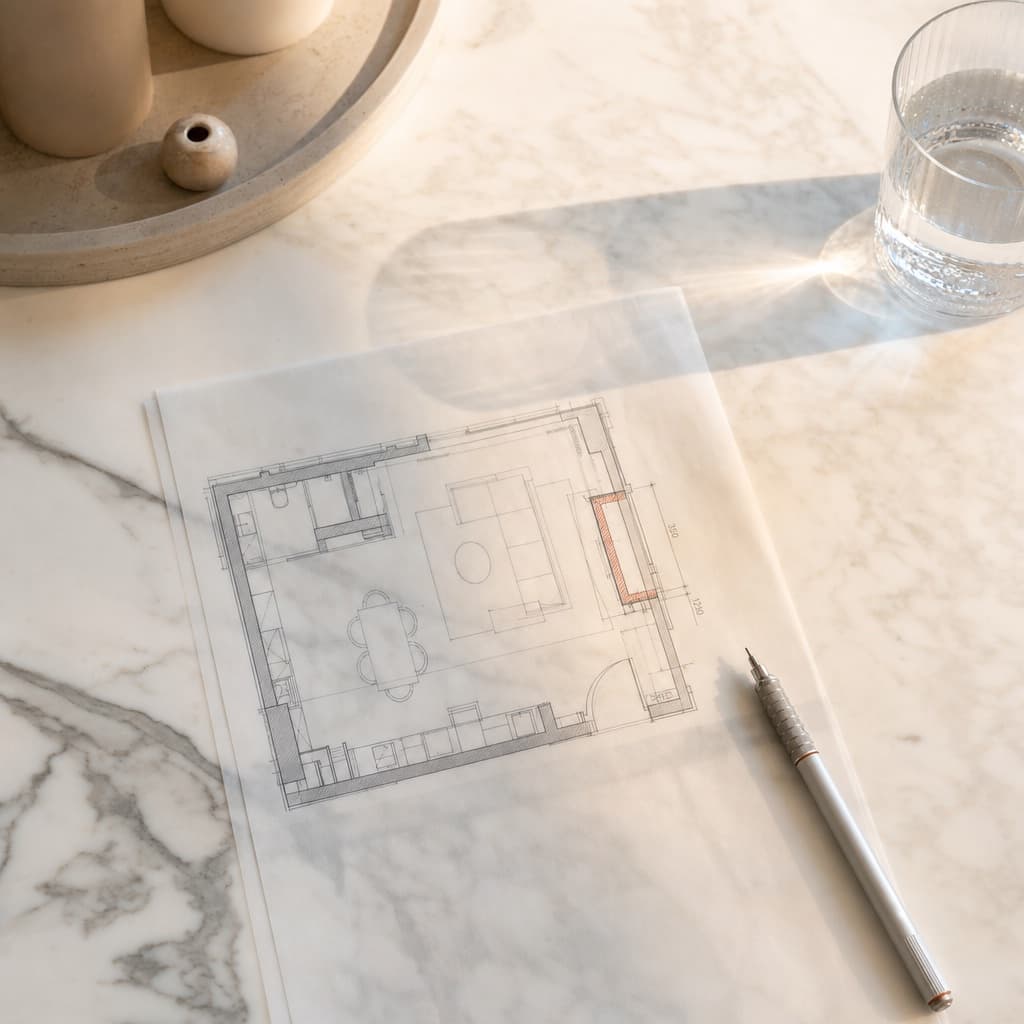 A small floor plan on tracing paper showing seating axis, window position, and the measured wall for a media unit.
Principle 1 — The longest seated sightline
Walk into your living room and sit on the spot you'd most likely place the sofa. Look around. The longest unobstructed sightline from that position is where the media wall belongs.
This is sometimes the longest wall, but often isn't. Modern open-plan apartments frequently have:
- A short wall facing a long room axis (placing the wall here gives a long viewing distance)
- A long wall on a short axis (placing the wall here forces close viewing, which works for smaller TVs only)
- Two equal walls but with different sightline contexts
The sightline test resolves the ambiguity. Sit. Look. The eye finds the right wall before measurement does.
Principle 2 — Light and sun
UAE sun does two things to a media wall:
-
Direct glare on the screen during certain hours. A TV facing a west-facing balcony will be unwatchable for 90 minutes around sunset. East-facing has the same problem at sunrise but during less common viewing hours.
-
UV exposure on the surfaces. Veneer fades unevenly when half the wall is in direct sun and half isn't. Real wood develops noticeable colour shift within 18 months of constant exposure; even sealed stone shifts slightly.
The simple rule: avoid placing the media wall on a wall that gets direct afternoon sun, when possible. If unavoidable, design with the sun in mind — UV-resistant lacquer finish, blinds or curtains as part of the room scheme, materials chosen with the exposure in view.
Principle 3 — Traffic flow
In every open-plan apartment there's a pattern of how people move through the room: kitchen to dining, dining to sofa, sofa to balcony, hallway to kitchen. Each of these is a path that someone walks every day.
The rule: traffic flow should pass behind the sofa, not between sofa and screen.
If a person walking from the kitchen to the balcony has to cross between the TV and the sofa, the room is functionally broken — every glass of water becomes an interruption. Repositioning the sofa or the media wall fixes this.
In Dubai apartments this often means the media wall ends up on an interior wall rather than the window wall, so the sofa faces away from the windows and traffic flows behind it.
Principle 4 — The architectural anchor role
In open-plan rooms with no real wall between living and dining zones, the media wall often becomes the de facto divider. A floor-to-ceiling unit running perpendicular to the room's flow visually separates "this is the living zone" from "this is the dining zone" without blocking light or sightlines.
When the media wall plays this role, it gets designed differently:
- It's read from two sides — the front (facing the sofa) and the back/side (visible from the dining or kitchen). Both sides need to be considered, not just the TV side.
- Materials extend around any visible side — a beautiful veneered wrap that the family sees daily from the kitchen view, not just from the sofa.
- Lighting is zoned to reinforce the divide — warmer ambient on the living side, cooler functional on the dining side.
Common UAE apartment layouts and where the wall goes
A few patterns covering most modern UAE apartments:
Studio or 1-bed with combined living/kitchen
The wall opposite the kitchen, facing the small sitting area. Typically 2.8–3.4m wide. Smaller TV (55–65"), tighter sofa-to-wall distance. The media wall does most of the room's visual work.
2-bed apartment, separate kitchen, large balcony
The interior wall opposite the windows. Sofa positioned with its back to the windows, facing the media wall. Standard 75-inch TV. Curtains or blinds for daytime light control.
3-bed apartment with open kitchen/dining/living
Most flexible layout, most placement options. Often the media wall sits on the long interior wall (the one shared with bedrooms) facing across the open zone. The wall doubles as a visual divider between living and dining.
Townhouse, double-height living room
The wall in the lowest viewing zone (eye level when seated on the sofa). Often a tall wall with the media wall occupying the bottom 3m and a feature panel or art continuing above. 85-inch TV is comfortable here.
Villa with multiple living zones
A media wall in the main TV room (often the family room rather than the formal living room). Larger walls (4m+), larger TVs (85–98"). Sometimes a second smaller media unit in the formal living room for occasional viewing.
The order of decisions
Most buyers make these decisions in the wrong order, then have to undo earlier choices:
Wrong order:
- Buy a TV (chosen by price or by a deal at a showroom)
- Buy a media wall to fit the TV
- Place the sofa where it fits
- Live with whatever sightlines and traffic patterns emerge
Right order:
- Identify the wall that best anchors the room (sightline, sun, traffic)
- Determine the optimal sofa-to-wall distance for that wall
- Choose a TV size matching the viewing distance
- Design the media wall around the TV and the wall dimensions
- Position the sofa
The right order takes longer at the planning stage but produces a room that works as a whole. The wrong order leaves you with a TV that's the wrong size, a sofa that doesn't quite fit, and a media wall that looks added rather than designed.
How a premium supplier handles placement
When a premium designer visits the apartment for the first site measurement, they should be thinking about more than dimensions:
- Where does the morning sun hit?
- Where does the afternoon sun hit?
- How does the family use this room — TV every evening, occasional movies, kids playing?
- Where will the sofa go, and where will the second seating go?
- What's the relationship to the dining table?
- What's the traffic pattern from kitchen to balcony?
- Is there a planned change (new flooring, repainted walls) that affects positioning?
If a designer skips these questions and proceeds straight to "show me the wall and I'll quote a price for it," the wall they design will be technically correct but architecturally indifferent. The questions are where premium design diverges from competent joinery.
Mistakes that show up after install
Three placement mistakes that don't show until the wall is installed:
-
AC vent above the media wall. Cold air falling directly onto the wall surface causes visible material stress over time. Either route the AC differently (rarely possible) or include the airflow in the design (deflectors, distance).
-
Door swing into the cabinet zone. Discovered when the door is opened on install day and hits the new cabinet. Solution: rehung door or modified design — either is expensive after fabrication.
-
TV cable run from a socket position that's hidden behind the wall. Discovered when AV is connected on install day. Solution: a re-routing job that should have been part of the original design.
All three are avoidable with a properly thorough site visit before fabrication. Almost all of them happen with rushed quote-by-photo suppliers who never visit before installation.
Frequently asked questions
About the author
The Walora Design Team has been crafting custom media walls for UAE homes since 2024 — every piece built to order in our Dubai workshop from real natural stone, premium stained wood veneers and bin-matched LED.
Related reading
Design & Inspiration9 min read
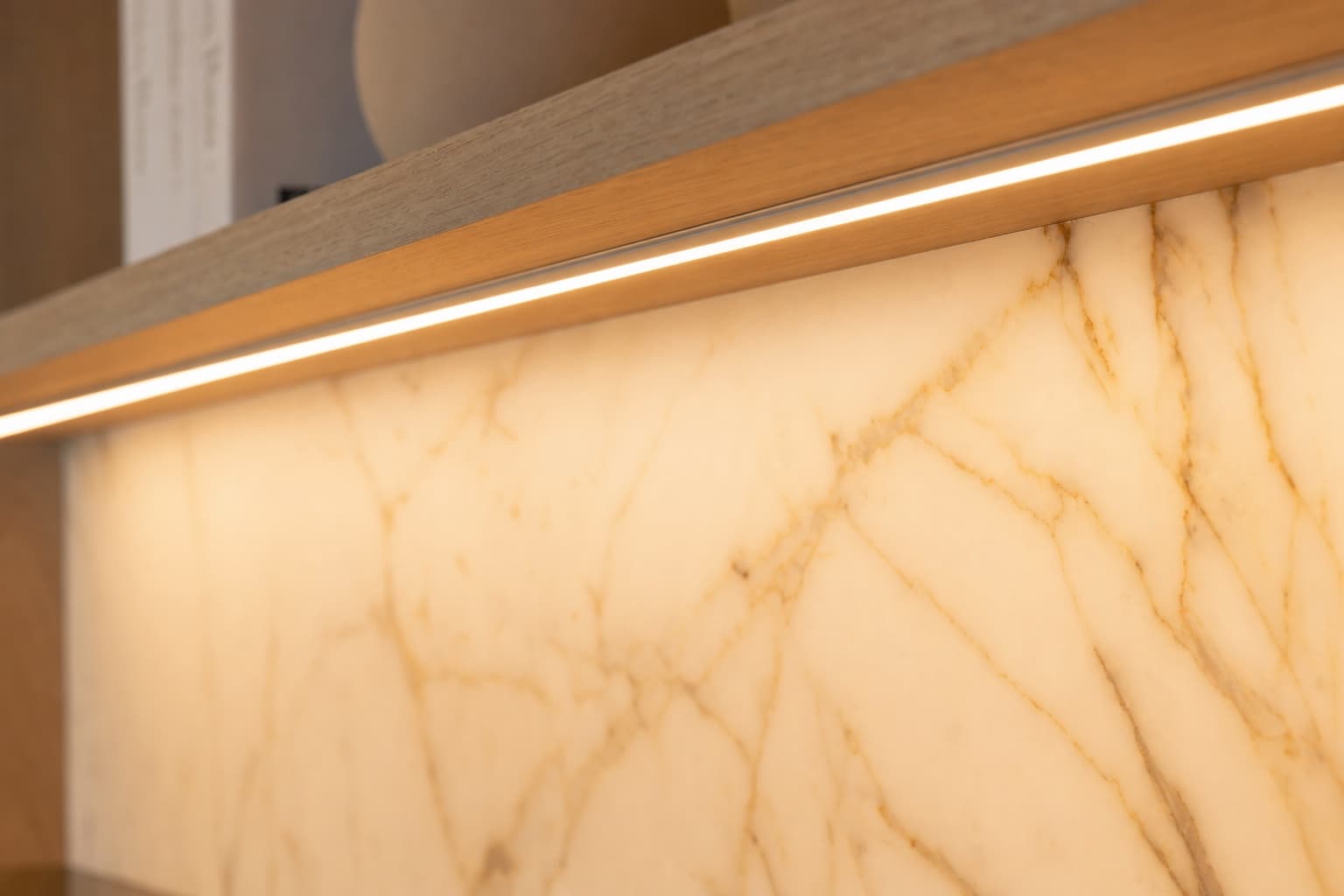
Premium LED vs Cheap Strip Lighting: What Actually Matters
CRI, bin matching, dimmer compatibility, driver quality — the four things that separate cinematic media-wall lighting from the strip lights at a hardware store.
Design & Inspiration10 min read
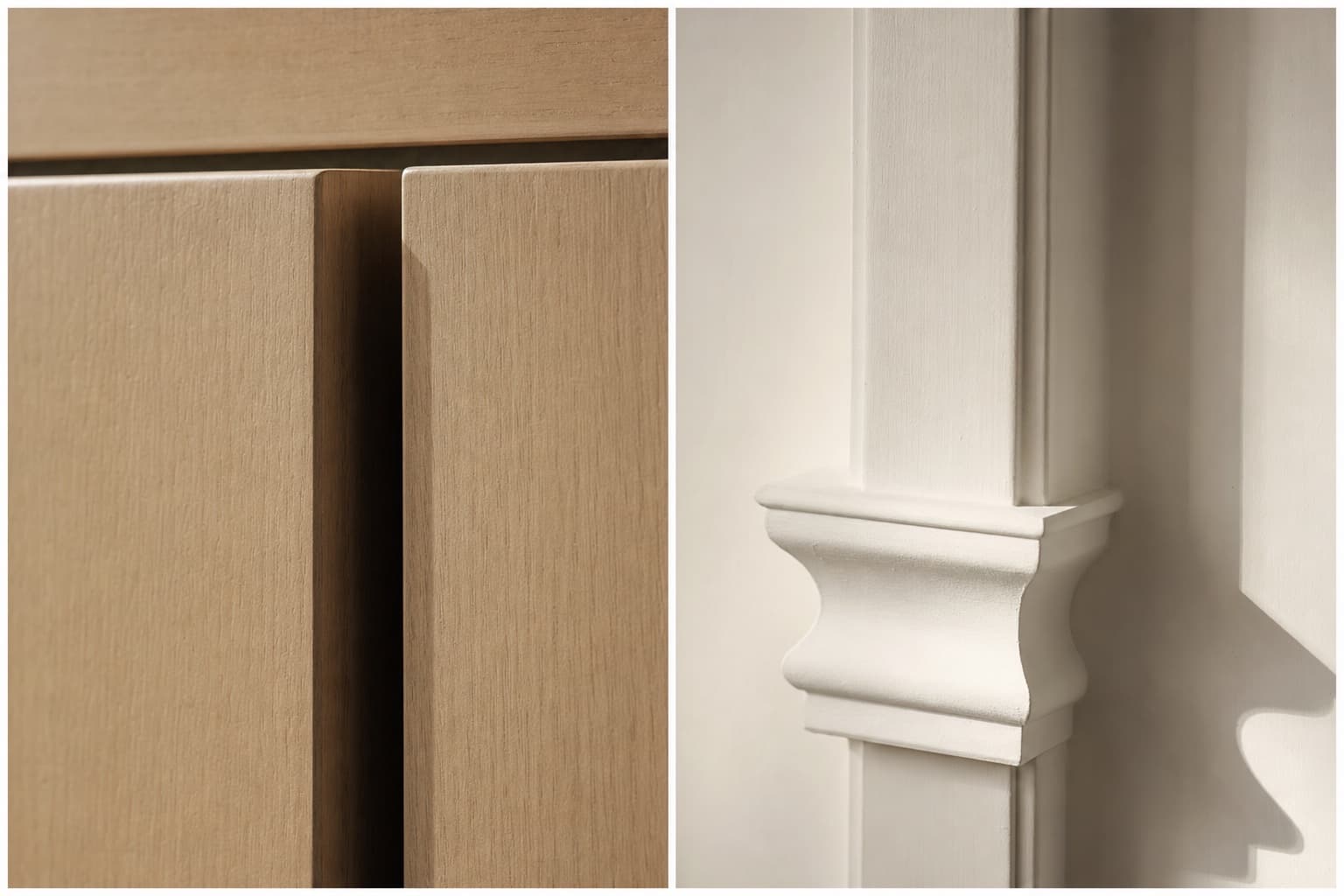
Modern vs Classic Media Wall Styles: A Visual Comparison
Clean-line modern vs detailed classic interiors. How to choose which language fits the rest of your home, and the design moves that distinguish each.
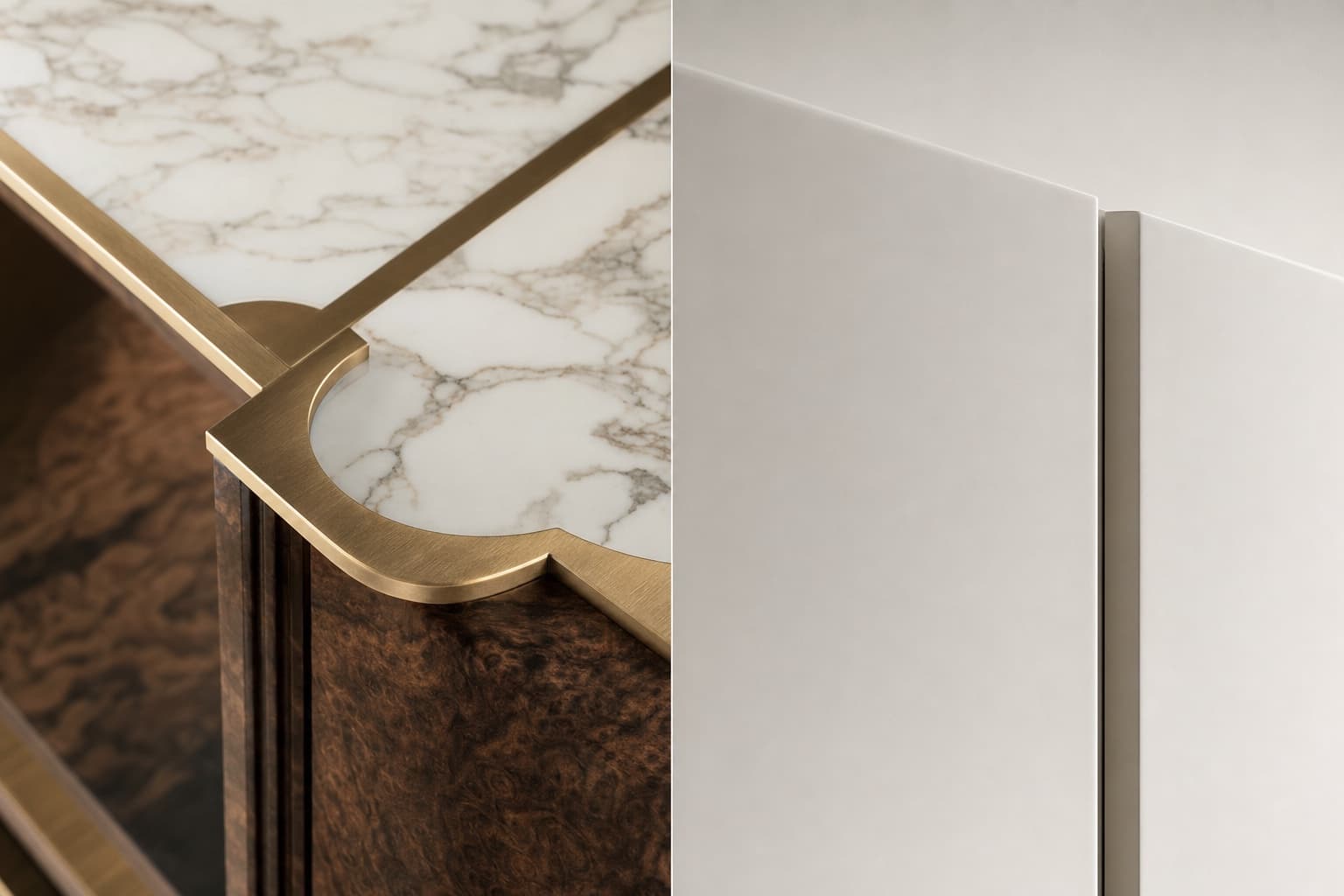
Design & Inspiration11 min read
Maximalist vs Minimalist Media Walls: Designing for the Interior You Have
When restraint is right, when richness is right, and the design principles that make either approach succeed in a UAE living room.