
MDF, Plywood, or Solid Wood: What Should a Media Wall Be Built From?
The substrate question every buyer eventually asks. Why furniture-grade MDF often beats solid wood in UAE climate, and where plywood is the only right answer.
by Walora Design TeamUpdated 9 min read
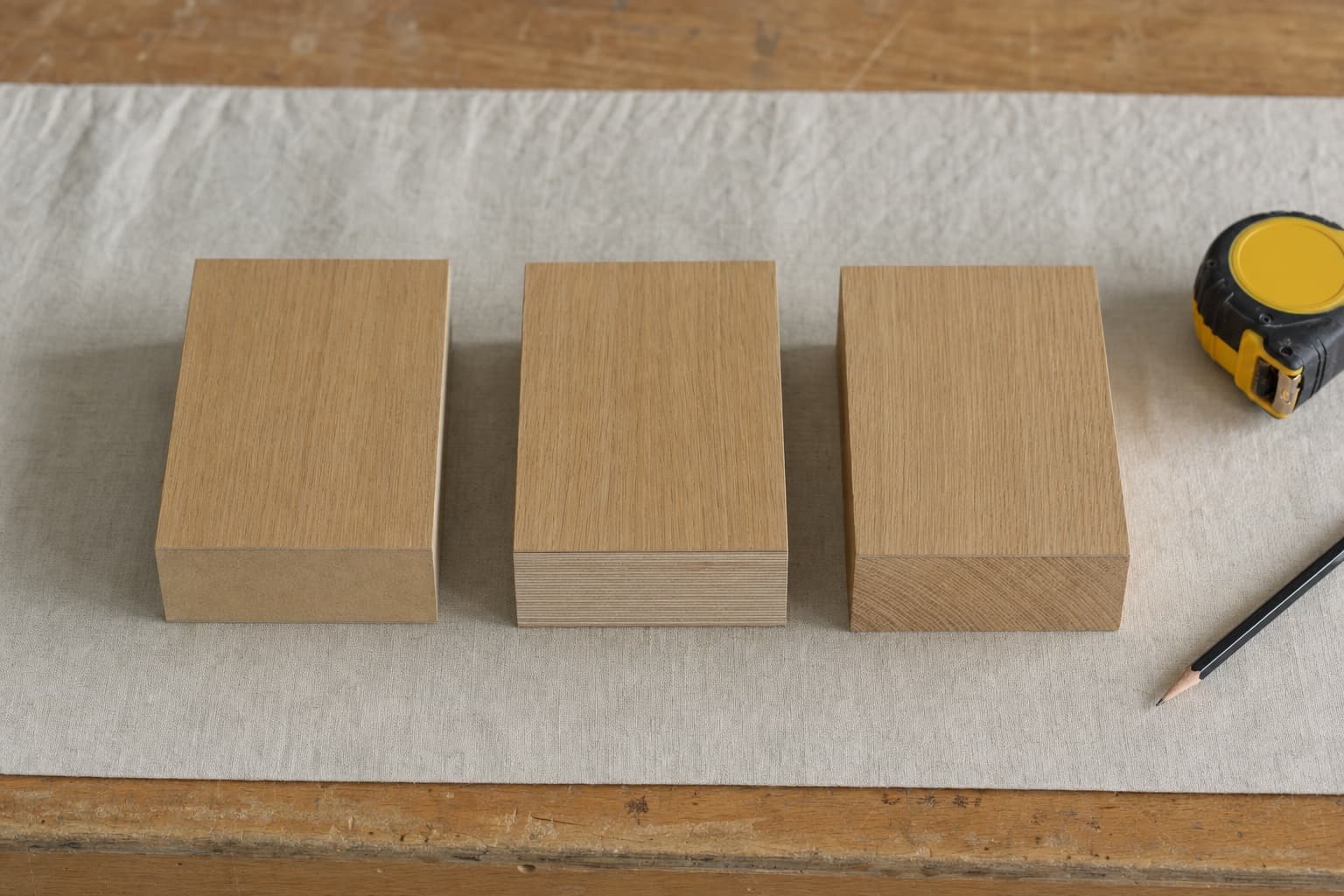
The substrate question is one of the most misunderstood in custom furniture. Buyers ask for "solid wood" assuming it's automatically premium. Sometimes it is; for large flat panels in UAE conditions it usually isn't. This is the honest comparison.
What each material actually is
Solid Wood
A board sawn directly from a tree, dried, milled, and finished. Strength along the grain is extraordinary; perpendicular to it, much less. Most importantly, solid wood "moves" — it expands when humid, contracts when dry, and can develop surface checks (small splits) when humidity cycles are large and fast.
Plywood
Layers of veneer (typically 1 to 2 mm thick) glued together with alternating grain directions. Each layer's tendency to move is cancelled by the adjacent layer's perpendicular grain, producing a panel that's dimensionally stable while keeping the strength of real wood. Premium furniture plywood — typically birch — has ten or more plies in a 19 mm sheet.
MDF (Medium Density Fibreboard)
Wood fibres bonded with resin under high pressure and heat. The fibres are oriented randomly, so the panel behaves the same in every direction. The surface is so uniformly smooth it can be lacquered to glass-flat finish without filler. Premium MDF is dense (740–780 kg/m³), moisture-resistant, and made in European or Japanese mills.
Particleboard
The budget option in this category. Wood chips bonded with cheap resin. Coarse internal structure, weak, very moisture-sensitive. Used in mass-market flat-pack furniture; should never appear in a premium custom media wall, including on backs and bases where it's most often quietly substituted.
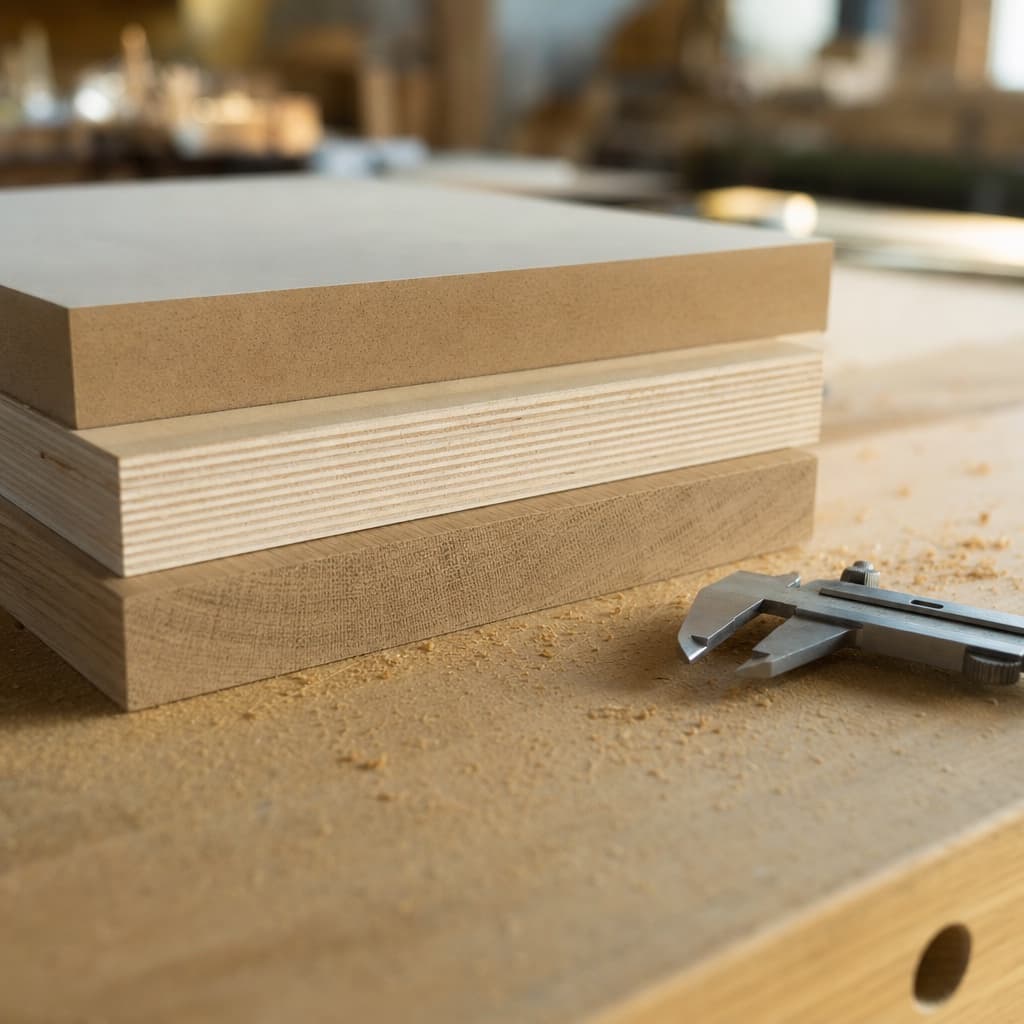 Cross-section samples of furniture-grade MDF, birch plywood, and solid European oak compared edge-on on a workshop bench.
Where each material belongs in a media wall
The right answer is rarely one material throughout. A premium media wall uses three or four substrates, each in the role it does best.
Why solid wood is not the automatic winner
Three reasons specific to UAE climate:
-
Humidity swings. Living rooms cycle between AC-dry (35–45% RH) and balcony-open humid (60–80% RH) multiple times a day in cooler months. Solid wood responds to each cycle with measurable expansion and contraction.
-
Heat sources. A solid wood panel directly behind or above a TV picks up heat from the screen, AV equipment, and adjacent surfaces. The heat dries one face while the back stays cooler, creating differential stress that warps the panel.
-
Direct sun. UAE balconies and windows deliver intense UV. Solid wood near a window fades unevenly along the grain pattern, where engineered substrate veneers fade uniformly because the surface is thin and stable.
This is why European craft furniture, which uses solid wood beautifully in damp temperate climates, sometimes underperforms in Dubai apartments. The wood is good; the climate is hostile.
The MDF myth, debunked
The most common buyer concern: "I don't want MDF. I want real wood."
This conflates two different things. Real wood is the visible surface, the species, the grain, the finish — what your eye sees. The substrate is what sits behind that surface to keep the panel flat and the cabinet square.
A veneered MR-MDF panel has a 0.6–1.0 mm slice of genuine real wood on its face. Visually it is wood. Mechanically it is engineered. This is exactly the right answer for large flat panels.
The MDF myth comes from cheap mass-market furniture (IKEA-tier or worse) that uses bottom-grade MDF or particleboard under foil or laminate. The visible surface is fake; the substrate is cheap; the whole thing is unconvincing. People remember the cheap version and assume all MDF is the same.
The honest reality: a furniture-grade MDF panel from Sonae, Egger, or Kronospan, faced with real European veneer, is the construction premium European brands have used for decades on large flat surfaces. Every Italian or German kitchen, every Danish wardrobe, every architect-specified joinery project. There is no high-end alternative that's better for these specific applications.
Reading a substrate spec on a quote
A premium quote will include all of:
- Substrate grade for each major component, by manufacturer (e.g., "18 mm Egger MR-MDF" / "18 mm Latvian birch plywood")
- Substrate density for MDF (≥ 740 kg/m³ for furniture grade)
- Number of plies for plywood (a 19 mm board should have ≥ 9 plies)
- Moisture-resistant grade (MR-MDF, marine-grade plywood) for any panel near AC vents or wet zones
If the quote says "MDF" without a grade or "wood" without further specification, the supplier is reserving the right to use whatever's cheapest. This is the most common source of unexpected longevity issues two years into ownership.
What about Egger, Sonae, Kronospan?
These are the three large European MDF manufacturers most often referenced in premium European furniture. All three make multiple grades, from budget to premium furniture-grade. Specifying the brand is necessary but not sufficient — the grade matters too.
A useful shortcut: if the quote says "Egger Eurodekor MR" or "Sonae moisture-resistant furniture grade", you're getting premium substrate. If it just says "Egger" without a grade, you're getting whatever Egger product is cheapest. Specificity wins again.
The honest summary
Solid wood: beautiful where it belongs, problematic on large flat panels. Plywood: the right answer for structural roles, occasionally for flat surfaces where movement matters. MDF: the right answer for flat veneered panels and for any surface that will be lacquered. Particleboard: not in a premium piece, anywhere.
A premium media wall combines the first three deliberately. The substrate question isn't "which material is best" — it's "which combination, with which grades, from which mills."
Frequently asked questions
About the author
The Walora Design Team has been crafting custom media walls for UAE homes since 2024 — every piece built to order in our Dubai workshop from real natural stone, premium stained wood veneers and bin-matched LED.
Related reading
Materials & Finishes9 min read
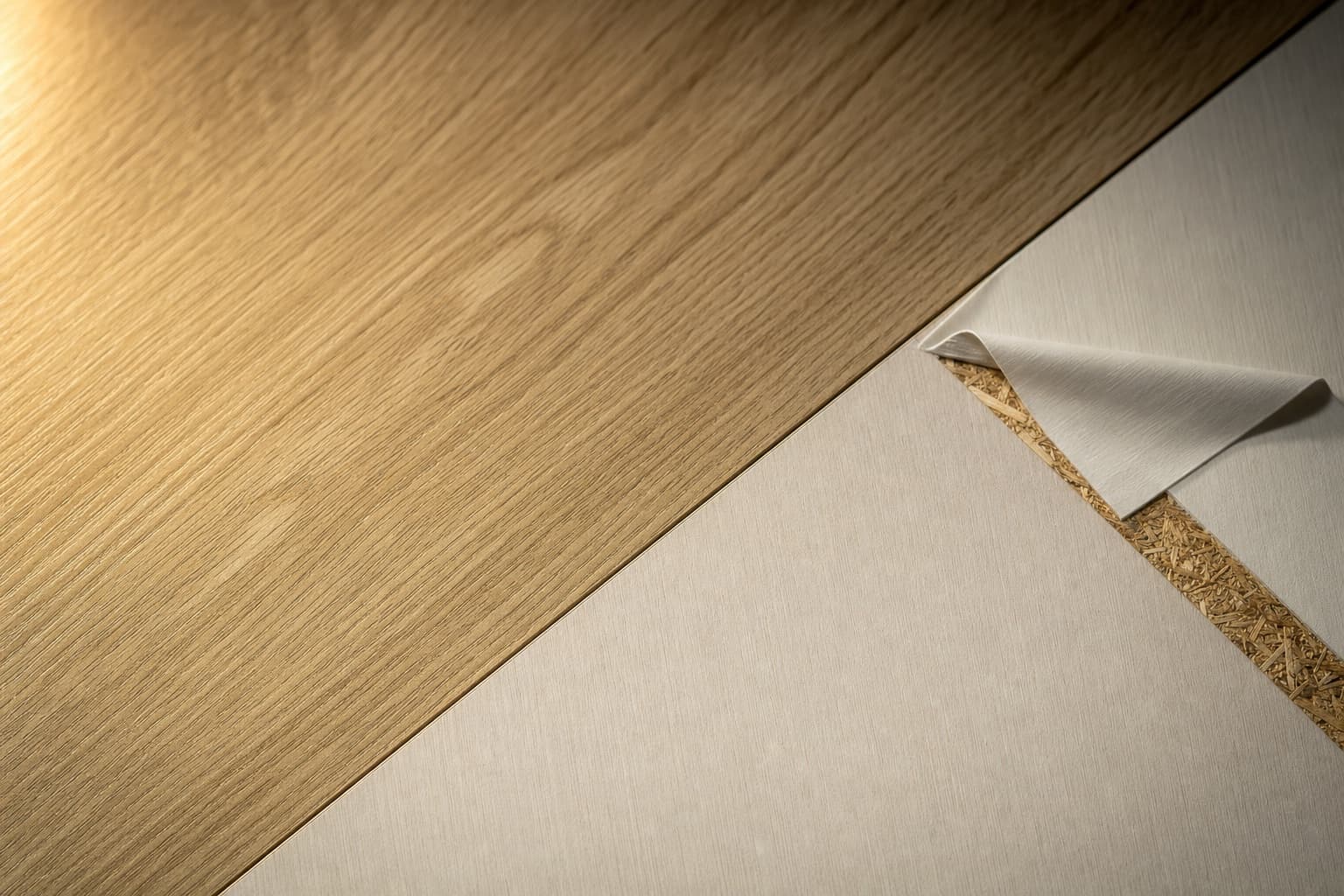
Real Wood Veneer vs Foil Wrap: A Field Guide for Buyers
Three near-identical surfaces with very different lifespans. How to tell European stained veneer from foil wraps and printed laminates before you pay for the wrong one.
Materials & Finishes9 min read
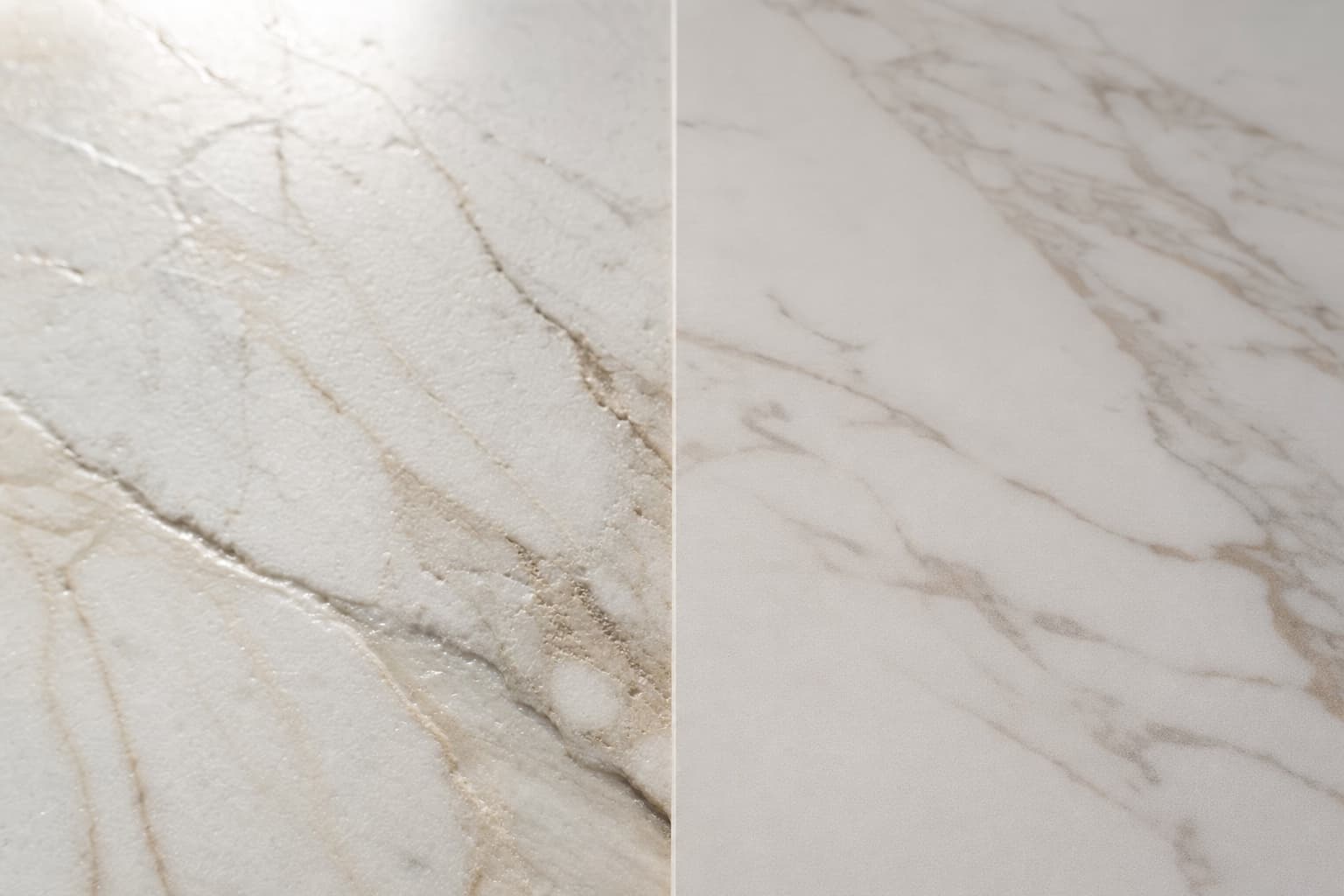
Real Marble vs Marble-Effect Panels: How to Tell the Difference
Solid stone slabs, marble-laminate sheets, sintered stone, HPL panels — what each one actually is, and how to spot the cheapest version of each.
Materials & Finishes8 min read
Premium Lacquer vs Standard Paint: What's Really on Your Cabinet
Furniture-grade matte lacquer is a five-step build. Standard painted cabinets are usually two coats with no primer. Here's how to spot which one you're buying.