
The Hardware That Separates a 10-Year Media Wall from a 3-Year One
Soft-close hinges, full-extension runners, push-to-open latches, concealed shelf supports — the parts you only see when the cabinet is open, and the parts most quietly downgraded.
by Walora Design TeamUpdated 9 min read
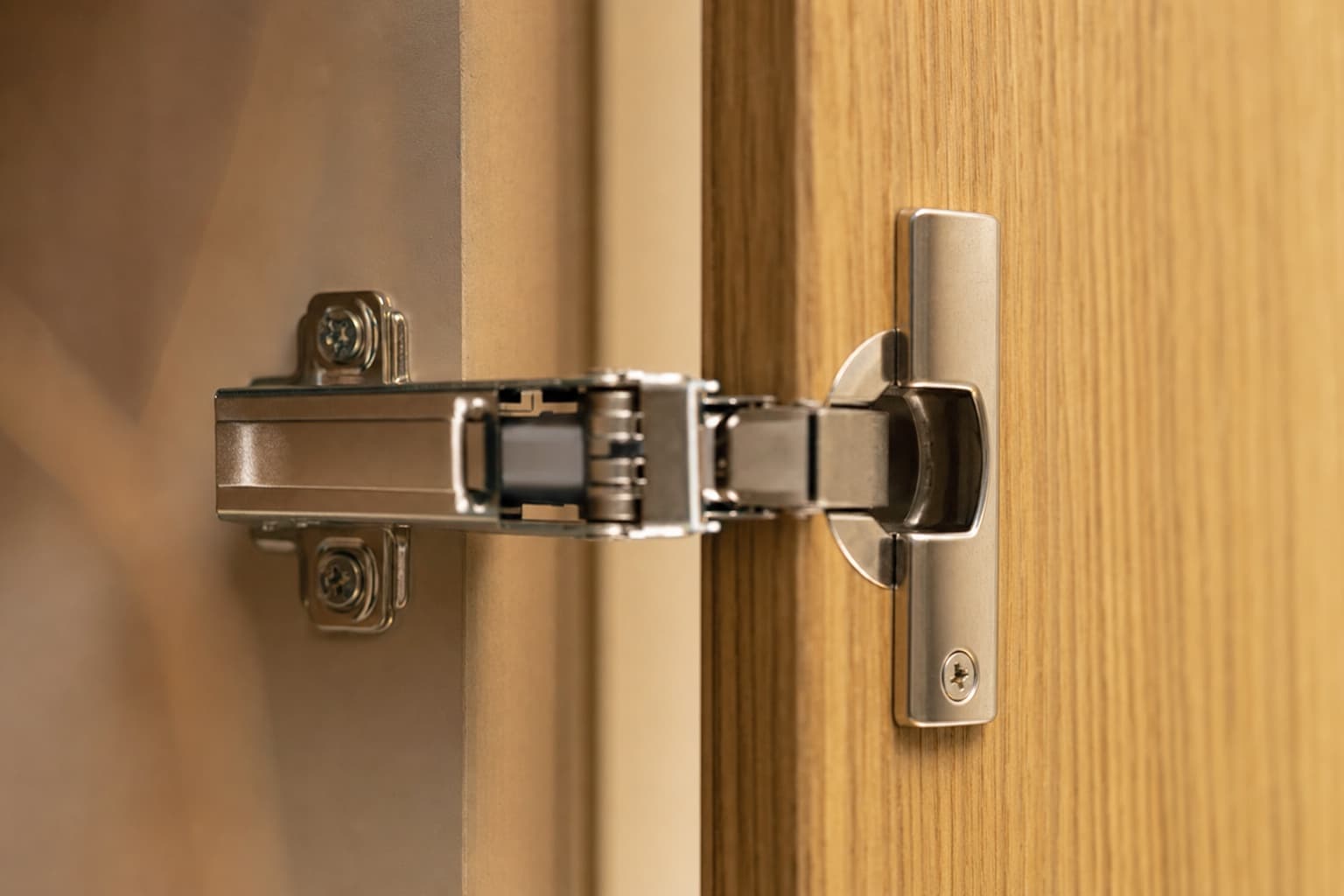
The parts of a media wall that determine whether you still like it in ten years are mostly invisible from across the room. They're the hinges, runners, latches, and supports inside. Suppliers know nobody asks about them, which is why they're the most quietly downgraded part of any quote.
Why hardware is the most leveraged spend
Take a single doored cabinet that opens twice a day, every day, for a decade. That's about 7,300 open/close cycles. Add the occasional rough open, the kid pulling on the handle to balance themselves, the door blown by an AC vent — call it 10,000 cycles over ten years.
A premium hinge from Blum or Hettich is rated to 80,000–200,000 cycles. The hinge will outlast the wall.
A cheap concealed hinge — typically unbranded, sometimes labelled as a generic "European" hinge — is rated to 15,000–20,000 cycles. It will fail in three to five years. The failure mode is loose play, then misalignment of the door, then audible slam (the soft-close mechanism wears out first), then complete failure where the hinge separates and the door falls.
The cost difference between premium and cheap hinges is roughly AED 20–35 per hinge. A typical media wall has 12 to 20 hinges. The total cost difference is AED 250–700.
Most quotes don't specify the hinges. The cheaper unit gets installed. Five years later, half the doors don't close properly. Replacement requires removing every cabinet face, drilling new fixing holes (the location is rarely the same as the cheap version), and refitting. By the time you've paid for that service, you've spent multiples of what the premium hinges would have cost on day one.
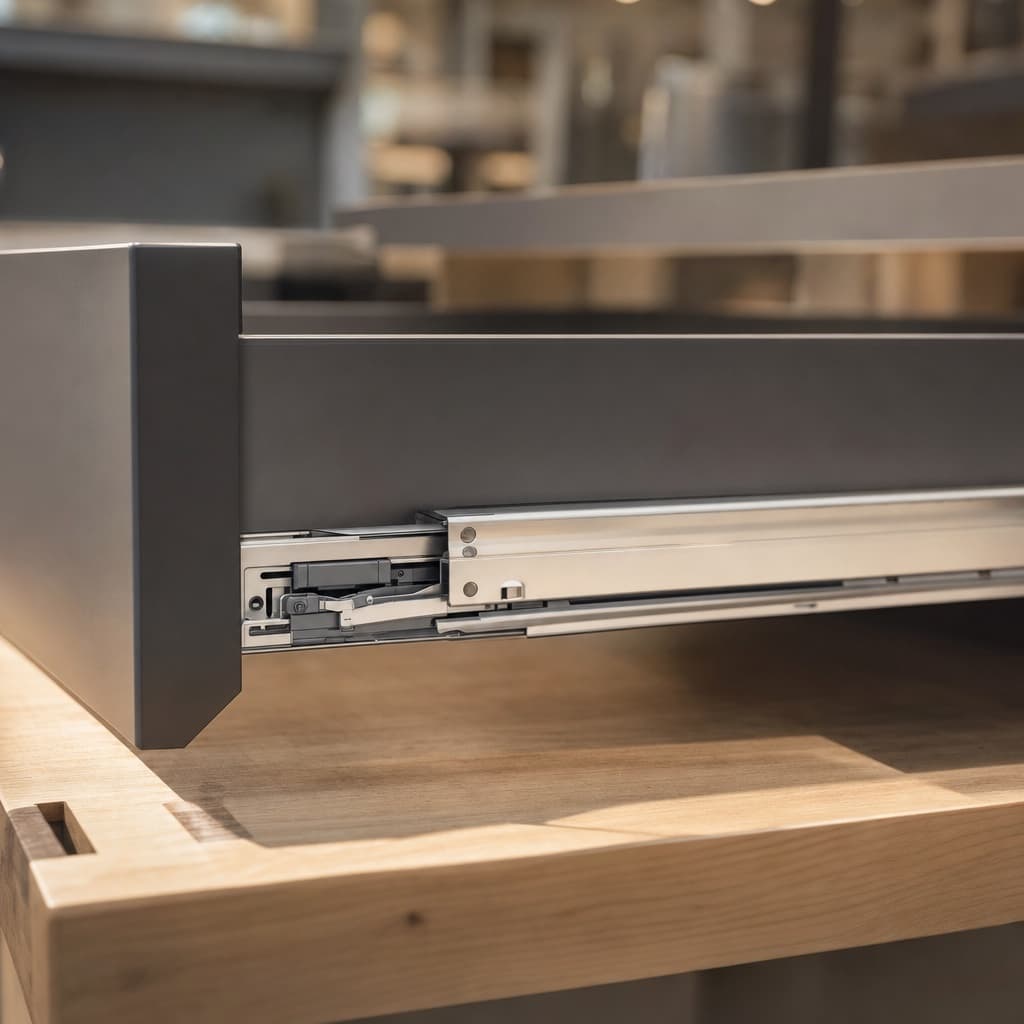 A Blum LEGRABOX soft-close drawer runner on a workshop bench, partially extended to show the BLUMOTION mechanism.
The hardware that should be specified by brand
Hinges
The category leader by an enormous margin. The two brands worth specifying:
- Blum (Austria) — CLIP top BLUMOTION is the most-used premium concealed hinge worldwide. Soft-close is integrated; cycle testing is 200,000.
- Hettich (Germany) — Sensys series is the direct equivalent and equally well-built.
Both have specific models for door sizes (small inset, full overlay, corner cabinets, glass doors), and the right model matters. A premium quote names the model, not just the brand.
Drawer Runners
The other category that's worth specifying by brand:
- Blum LEGRABOX or TANDEMBOX — full-extension ball-bearing runners with optional electric soft-close, dynamic load capacity 30–70 kg.
- Hettich Quadro — direct equivalent, equally robust.
Premium runners use ball bearings and steel rails. Cheap runners use plastic rollers on stamped sheet metal. Both look acceptable when installed; the cheap ones develop play and sag within two years.
Push-to-Open Latches
For handle-less designs (a growing trend in premium media walls), the latch is what makes the design work. The two reliable products:
- Blum TIP-ON — mechanical push-to-open, completely silent, very long cycle life.
- Hettich Push to Open Silent — direct equivalent.
Both can be combined with soft-close hinges. The result is a door that opens at a single tap and closes itself quietly.
Concealed Shelf Supports
A small detail with a disproportionate visual impact. Premium walls use concealed adjustable shelf supports — the shelf appears to float against the cabinet side. Budget walls use visible pin supports that look fine on day one and become visually messy over time as shelves are moved.
Brands: Häfele Strato, Hettich Toplight, Blum AVENTOS-style concealed clips.
TV Mount
The piece that holds the most expensive object on the wall. A premium mount is:
- Rated for at least 2× the screen weight
- Tilting (up to 15° down) for above-eye-level placement
- Pull-out and swivelling for serviceability behind the TV
- Concealed when not in use
Brands: Vogel's, Sanus, Erard. Cheap mounts from online retailers may be rated for the screen weight but fail at the swivel joint or develop sag within 12 months.
The drawer-runner test you can do in any showroom
The single fastest hardware test in a showroom: open the deepest drawer fully and look at how it moves.
A premium drawer with full-extension ball-bearing runners moves silently, supports weight along its full travel, and stops with a soft cushion at the end. The entire drawer interior is accessible.
A cheap drawer with plastic-roller runners makes a faint grinding sound, sags slightly when loaded, and stops abruptly at the partial-extension limit. About 20 percent of the drawer remains permanently inside the cabinet.
This test takes two seconds, costs nothing, and reveals more about the build quality of the entire piece than almost any other observation.
What "European soft-close hinges" usually means
A common quote phrase. Reliable suppliers use it because their hinges are genuinely European. Less reliable suppliers use it because it sounds premium while leaving them free to install whichever generic concealed hinge is cheapest on the day.
Three follow-up questions resolve the ambiguity:
- Manufacturer and model. "Blum CLIP top BLUMOTION" is an answer. "European brand" is not.
- Cycle rating. Premium hinges have published cycle tests (200,000 for Blum BLUMOTION). Generic hinges don't have published ratings because the testing isn't done.
- Warranty. Blum and Hettich offer multi-year warranties on their hinges. Generic hinges don't.
The supplier's reaction to those three questions is often more informative than the answers themselves. Premium suppliers welcome them; budget suppliers deflect.
The bottom-line maths
For an average media wall — roughly AED 18,000 to 28,000 in total — the hardware upgrade from mid-tier to premium costs about AED 600 to 1,200. That's 3 to 5 percent of the total budget.
For that 3 to 5 percent, you get hardware rated for 10× the cycle life, fewer visible cheats (concealed shelf supports, push-to-open in the right places, full-extension drawers), and a piece that mechanically still works in 15 years instead of needing significant repair at year 5.
There is no other category in a media wall where a small absolute spend creates this much downstream value. Hardware is the easiest line item to be specific about and the highest-leverage upgrade in the entire build.
Frequently asked questions
About the author
The Walora Design Team has been crafting custom media walls for UAE homes since 2024 — every piece built to order in our Dubai workshop from real natural stone, premium stained wood veneers and bin-matched LED.
Related reading
Materials & Finishes9 min read
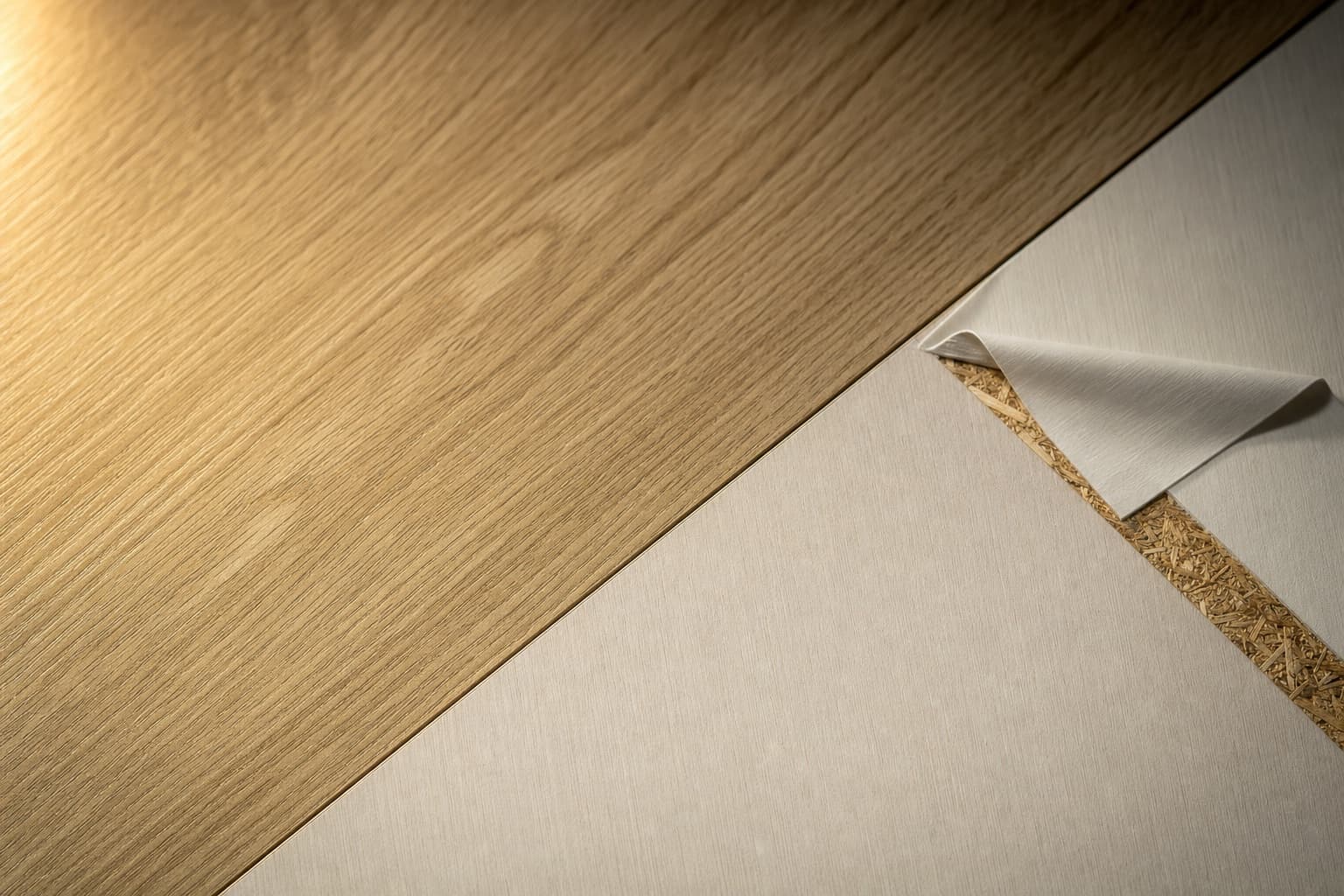
Real Wood Veneer vs Foil Wrap: A Field Guide for Buyers
Three near-identical surfaces with very different lifespans. How to tell European stained veneer from foil wraps and printed laminates before you pay for the wrong one.
Materials & Finishes9 min read
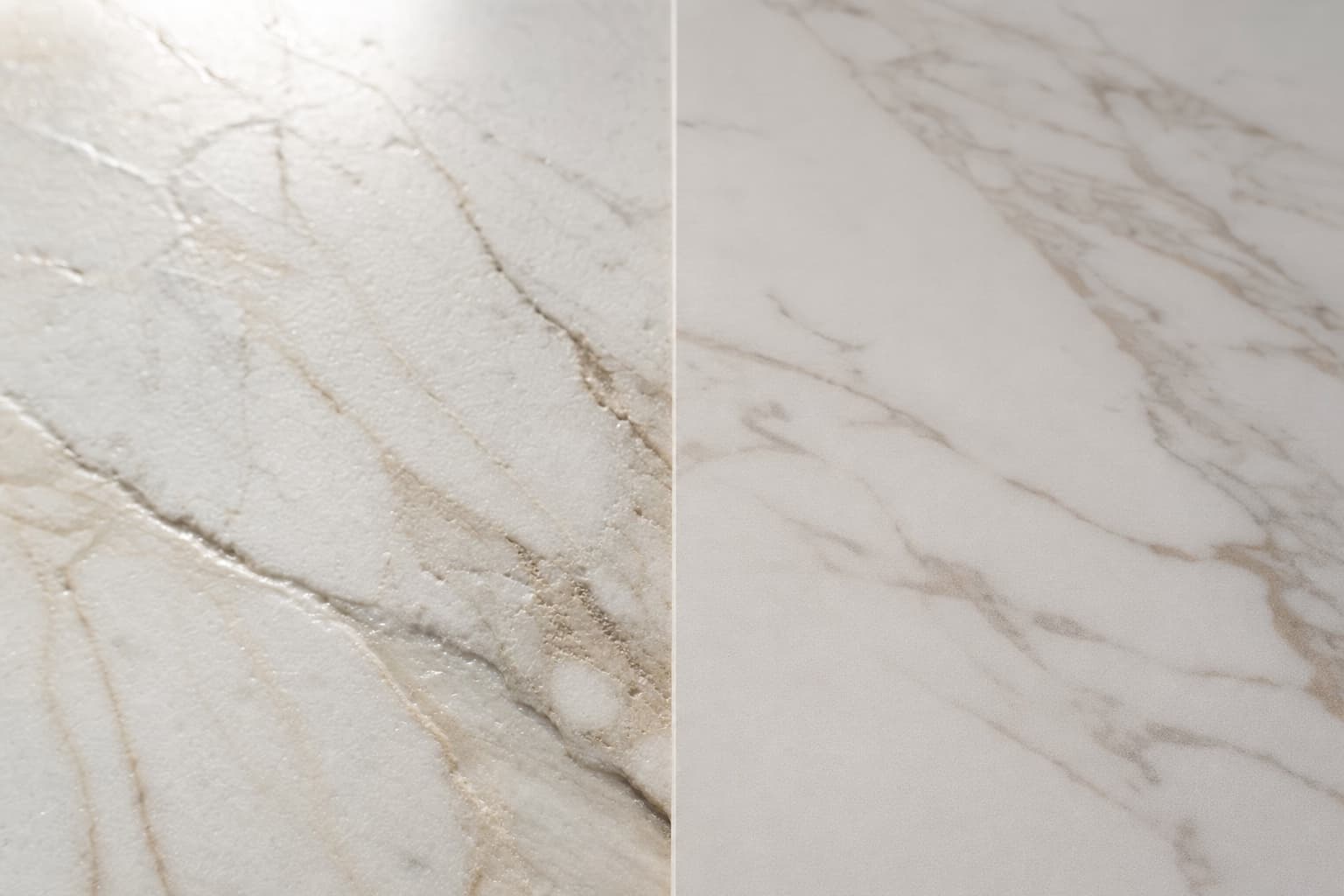
Real Marble vs Marble-Effect Panels: How to Tell the Difference
Solid stone slabs, marble-laminate sheets, sintered stone, HPL panels — what each one actually is, and how to spot the cheapest version of each.
Materials & Finishes8 min read
Premium Lacquer vs Standard Paint: What's Really on Your Cabinet
Furniture-grade matte lacquer is a five-step build. Standard painted cabinets are usually two coats with no primer. Here's how to spot which one you're buying.