
Fireplace + Media Wall Combos: 2026 Trends for UAE Homes
Electric, bioethanol, water-vapour — which fireplace type works in a UAE apartment, where to place it relative to the TV, and the design moves that make the combination work.
by Walora Design TeamUpdated 11 min read
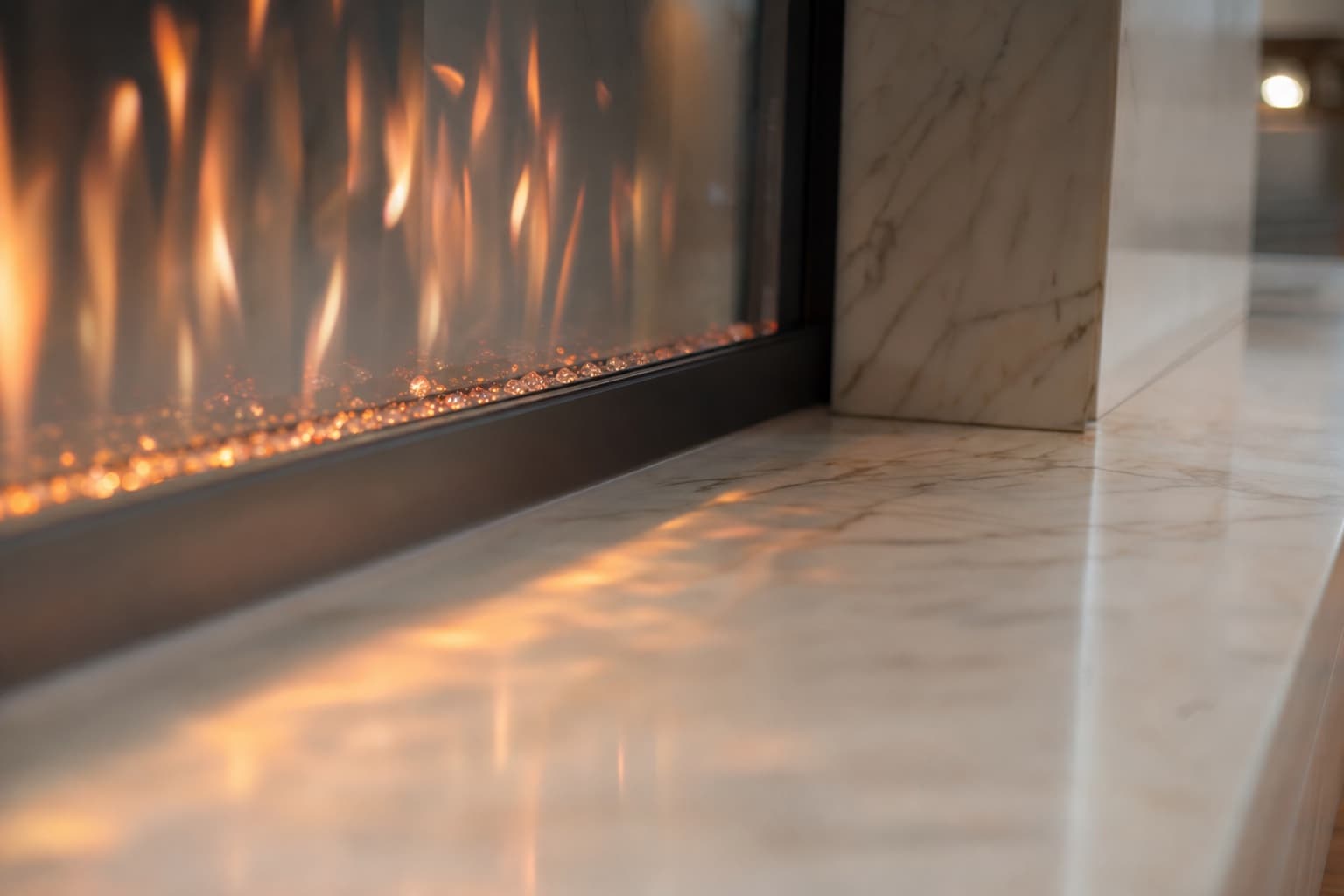
The single most-requested upgrade in 2026 UAE media walls. The combination of a low linear fireplace under a wide TV, integrated into a continuous stone or veneer surface, is the defining look of premium living rooms this year. Here's how it actually works.
Why fireplaces are having a moment in UAE design
Three things converge to make this a 2026 trend:
-
Technology has caught up. Water-vapour and premium electric fireplaces now deliver visual realism that earlier products couldn't. They photograph well, they look right at conversation distance, they don't read as fake.
-
The visual language fits. Long horizontal linear fireplaces complement wide TVs, which complement the contemporary horizontal-emphasis design language that's currently dominant in premium UAE interiors.
-
The emotional case is universal. A fire — even a simulated one — adds warmth and focus to a room in a way nothing else does. The romance of fire transcends climate.
The market has responded: by 2026, fireplace inserts are present in roughly 40 percent of premium custom media walls in the UAE, up from under 10 percent five years ago.
 Macro of a linear electric fireplace flame effect reflected softly off a polished light Calacatta marble surround.
The four fireplace technologies
Electric (LED + flame illusion)
How it works: LED light projected onto a 3D-printed or moulded back panel, sometimes with a rotating mirrored rotor to simulate flicker. Some models add ember-like glow effects below.
Realism: 7–9/10 in premium models at conversation distance.
Heat: Optional — flame effect alone uses 5–15W; heat mode adds 1.5–2 kW.
Installation: Plug into a normal outlet. No venting. Standard cabinet recess (~150mm deep).
Best for: Most UAE apartments. The default modern fireplace choice.
Brands: Dimplex Opti-V, Faber e-Slim, Modern Flames Orion, Glen Dimplex Ignite.
Cost: AED 4,500–12,000 for premium models.
Water-vapour ("steam fireplaces")
How it works: An ultrasonic mist generator creates water vapour rising from below, illuminated by LED in flame colours. The effect is uncannily realistic — visually identical to a flame at conversation distance.
Realism: 9–10/10 in premium models. Often indistinguishable from real fire in photos.
Heat: Zero. Cool to the touch.
Installation: Needs a water supply (small tank, refilled occasionally) or plumbed connection. Standard cabinet recess.
Best for: UAE summers, no-heat applications, photogenic feature in social spaces.
Brands: Dimplex Optimyst, Sygni Glass, AFire, GlammFire.
Cost: AED 8,000–22,000 for premium linear units.
Bioethanol
How it works: A burner filled with bioethanol fuel ignites and produces actual flames.
Realism: 10/10 — it's real fire.
Heat: Significant. 1.5–3 kW depending on burner. Often unwanted in UAE summers.
Installation: Requires building management approval. Ventilation needed (small openings near the burner allow combustion air). No flue or chimney required. Fuel: bioethanol costs AED 30–50 per litre; a typical evening burns 0.5–1 litre.
Best for: Climate-controlled use; not suitable for many apartment buildings; ongoing fuel cost.
Brands: Planika, EcoSmart Fire, Anywhere Fireplaces.
Cost: AED 6,000–18,000 for premium linear inserts.
Gas (rarely)
How it works: Natural gas or LPG combustion with a flue.
Reality in UAE: Almost never used in apartment buildings. Some standalone villas with proper flue systems can install gas fireplaces, but the installation, permitting, and certification adds significant complexity and cost.
Cost: AED 12,000–40,000 plus flue installation.
Integration with the media wall
The integration question matters more than the fireplace choice. Three approaches:
Fully integrated linear insert
A long horizontal fireplace (typically 90–150cm wide) recessed into the lower portion of the media wall, with a continuous frame matching the wall's stone or veneer. The fireplace reads as part of the wall, not as a separate appliance.
This is the most architectural approach and the most demanding to design. The cabinet around the fireplace needs proper venting (for electric, heat dissipation; for bioethanol, combustion air); the materials around the fireplace need to be heat-tolerant (real stone is ideal; veneer needs distance from heat).
Framed fireplace as feature
A fireplace within a deliberate frame — often a contrasting material like blackened steel or a marble surround — that becomes a feature element on the wall. The TV sits above on a different visual register.
Less integrated than the linear approach but allows more visual contrast and reads more traditionally classical.
Standalone freestanding within media wall context
A separate fireplace unit on the floor below or near the media wall. Easiest to install, least integrated visually. Common in apartments where the media wall is being added to an existing room with limited reconstruction.
Height and proportion
The TV-above-fireplace geometry needs care:
- Fireplace top edge: typically 80–95cm from floor (low enough to keep TV at eye height)
- Gap between fireplace top and TV bottom: 80–150mm (clearance for venting and visual breathing room)
- TV bottom edge: typically 90–105cm from floor
- TV centre: 105–115cm from floor (seated eye height)
If the fireplace is positioned too high (top above 100cm), the TV ends up above eye level and viewing becomes uncomfortable for long sessions. This is the most common mistake in DIY fireplace-and-TV combinations.
The water-vapour case for UAE
Water-vapour fireplaces deserve special mention because they solve a specific UAE problem.
Real fires produce heat. Even "flameless" technologies like bioethanol produce significant warmth. In UAE summers — when AC is running constantly to maintain ~22°C against 40°C+ outside — adding a heat source is counter-productive.
Water-vapour fireplaces produce zero heat. The illusion of fire without the actual fire. You can run it year-round, including peak summer, without affecting the room's temperature or the AC load.
Combined with the realism (genuinely fire-like at conversation distance), this is why water-vapour is over-represented in premium UAE installations relative to other markets.
The trade-offs:
- Higher initial cost than electric (~50–80 percent more)
- Need for water supply (small tank, easy to refill, or plumbed)
- Periodic cleaning of the mist generator (every 6–12 months)
For premium installations where the fireplace is meant to be used year-round and look as realistic as possible, water-vapour is often the right answer despite the cost.
When a fireplace doesn't make sense
Three situations where the fireplace addition is worth reconsidering:
-
Small apartments where the visual weight is too much. A linear fireplace below a 75-inch TV is a lot of element on a 3m wall in a tight room. Smaller rooms sometimes benefit from leaving the lower wall clean.
-
Rooms where the wall isn't the primary feature. If the room has a dominant view, art collection, or other architectural element, a fireplace can compete rather than complement.
-
Budget-constrained projects where the fireplace would displace material quality. Better to have a premium media wall without a fireplace than a mid-tier media wall with a fireplace. The materials matter more.
The 2026 design moves
A few trends specific to current UAE projects:
- Black volcanic stone surrounds for fireplaces against light marble or warm wood — strong contrast, dramatic effect
- Brushed brass linear fireplace fronts as an alternative to stone — adds warmth and reflectivity
- Hidden fireplaces — a sliding panel reveals the fireplace when needed, conceals it otherwise (the same hide concept as TV concealment, applied to the fire feature)
- Twin fireplaces — two narrower linear inserts flanking the TV rather than one below — striking but space-demanding
- Floor-level fireplaces — fire at floor height, with the TV at standard height above empty wall — a more architectural and less symmetrical approach
Like all design trends, some of these will age well and some won't. The fireplace technology and the wall materials don't change; the visual composition does. Choosing a configuration that works for your specific room rather than copying a current trend tends to age better.
Cost summary
A typical premium media wall with integrated fireplace breakdown:
- Media wall base build: AED 22,000–32,000
- Premium electric fireplace insert: AED 5,000–10,000
- Water-vapour upgrade if chosen: AED 8,000–18,000 (replaces electric)
- Additional millwork for integration: AED 2,000–4,000
- Smart-home wiring for remote control: AED 800–1,500
Total: AED 30,000–55,000 for an integrated premium fireplace media wall.
A significant project, in absolute terms. For homes where this room is the primary social space and the wall defines the apartment's identity, it tends to earn out — both in daily use and in the visual identity of the home.
Frequently asked questions
About the author
The Walora Design Team has been crafting custom media walls for UAE homes since 2024 — every piece built to order in our Dubai workshop from real natural stone, premium stained wood veneers and bin-matched LED.
Related reading
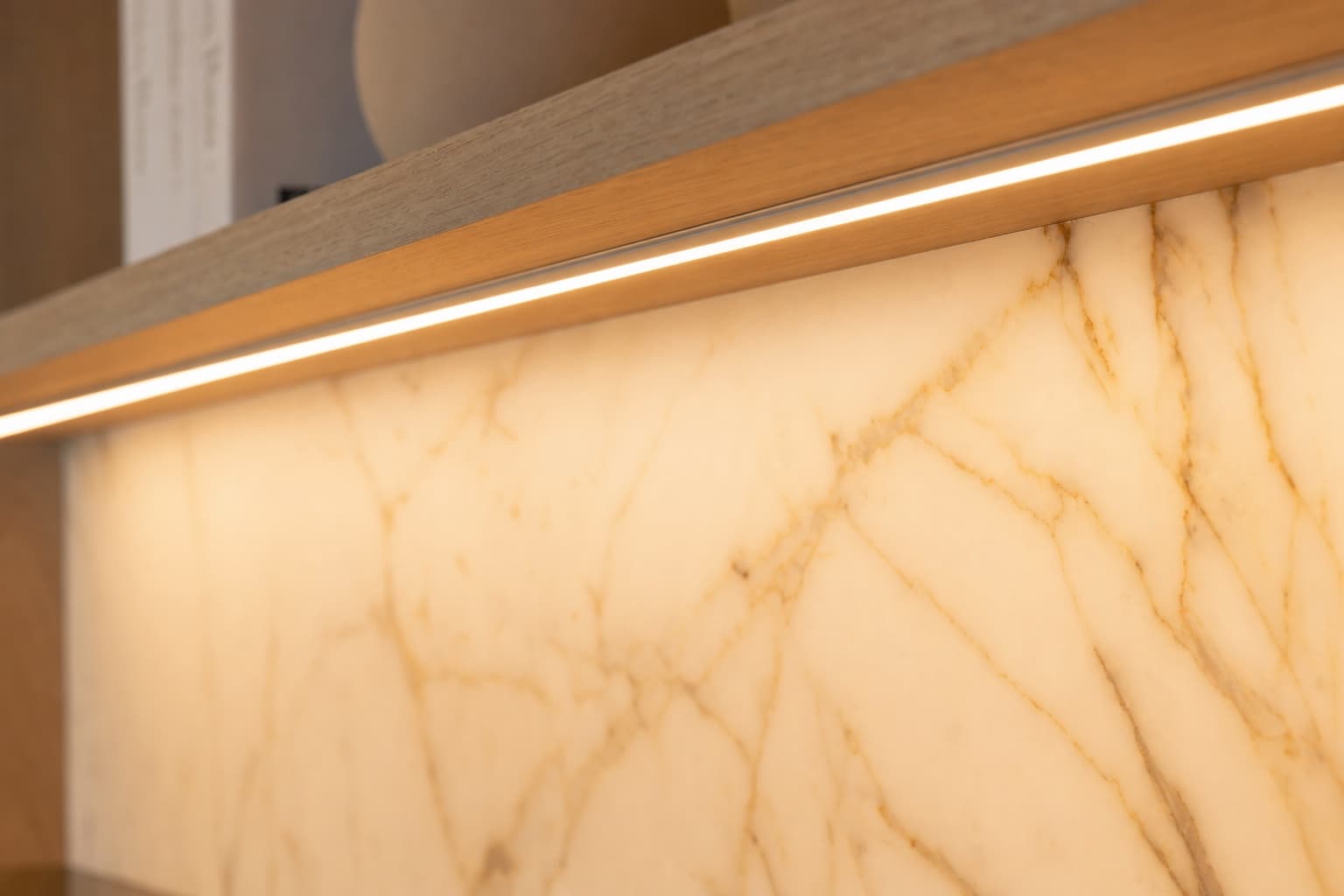
Design & Inspiration9 min read
Premium LED vs Cheap Strip Lighting: What Actually Matters
CRI, bin matching, dimmer compatibility, driver quality — the four things that separate cinematic media-wall lighting from the strip lights at a hardware store.
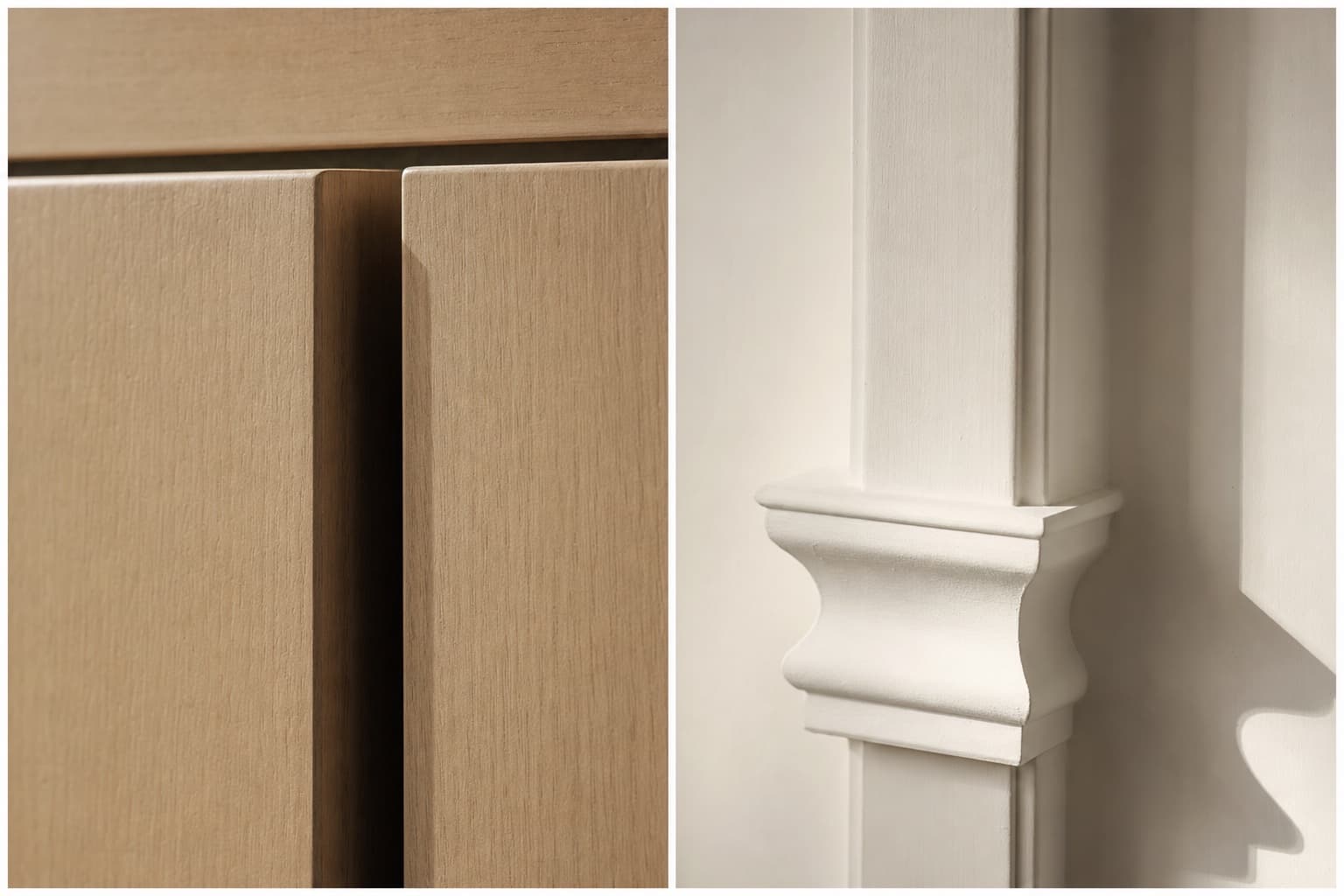
Design & Inspiration10 min read
Modern vs Classic Media Wall Styles: A Visual Comparison
Clean-line modern vs detailed classic interiors. How to choose which language fits the rest of your home, and the design moves that distinguish each.
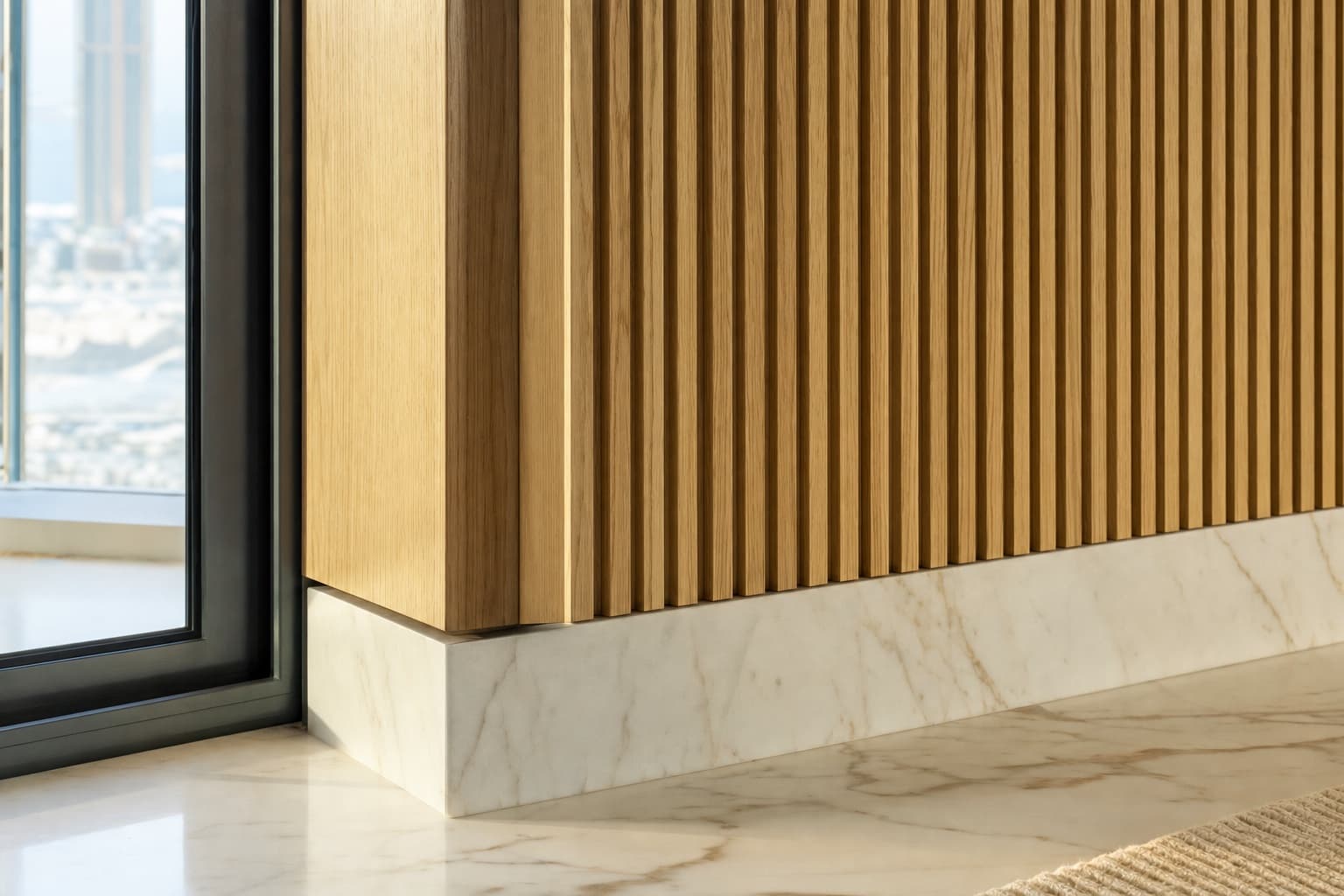
Design & Inspiration10 min read
Where to Place a Media Wall in an Open-Plan Living Room
Open-plan apartments rarely have an obvious 'TV wall'. The four placement principles that decide whether the media wall anchors the room or fights it.